
KEY TAKEAWAYS
- Pre-trip inspections, DVIRs and roadside inspections catch defects a person can see or hear, such as worn tires, brake problems, air leaks and broken lights.
- Brakes and tires dominate roadside findings: in CVSA’s 2026 International Roadcheck, brake systems were the top vehicle out-of-service violation at 24.3%, and brake-related violations made up 39.1% of all vehicle out-of-service violations.
- Many failures develop out of sight first: a weakening battery, rising coolant temperature, falling oil pressure, poor DPF regenerations or slow tire pressure loss can look fine at the walkaround and fail on the highway.
- Vehicle data closes that gap by watching how each component behaves between inspections and flagging drift before it becomes a roadside incident.
- Inspections stay mandatory; the strongest safety programs combine them with continuous vehicle data, feeding both into one repair process.
Every morning, drivers walk around their trucks, check tires, lights, brakes and fluid levels, and confirm the vehicle is safe to drive. That pre-trip inspection, backed by the driver vehicle inspection report (DVIR), is one of the most important safety habits in trucking.
But some of the most dangerous vehicle problems don’t show up on a walkaround. A battery that’s losing charge, an engine that’s running a little hotter every day, or oil pressure that’s drifting down at idle all look normal from the outside, right up until the truck stops on the shoulder of a busy interstate.
In this blog, you will learn what inspections are designed to catch, which vehicle safety risks they can’t see, how those hidden risks turn into incidents, and how fleets combine inspections with vehicle data to catch both.
What inspections are designed to catch
US motor carriers are required to systematically inspect, repair and maintain their vehicles under 49 CFR Part 396. Day to day, that means three kinds of inspection:
- Pre-trip inspection: the driver checks the vehicle before driving and reviews the last DVIR. It catches visible and audible defects such as worn tires, brake problems, broken lights, leaks, mirrors and coupling devices.
- DVIR: the driver’s written report of defects found during or after the day’s driving. Any defect must be repaired, and the repair certified, before the vehicle runs again.
- Roadside inspection: an inspector checks the driver and vehicle against out-of-service criteria, looking for serious defects that make the vehicle unsafe to operate.
For the details, see what is a DVIR, the pre-trip inspection guide and DOT inspection levels.
Roadside findings show where visible defects concentrate. In the Commercial Vehicle Safety Alliance’s 2026 International Roadcheck, held May 12 to 14, inspectors conducted 54,575 inspections across North America. Brake systems were the top vehicle out-of-service violation at 24.3%, and brake-related violations together made up 39.1% of all vehicle out-of-service violations. Tires ranked second, at 20.9%, according to The Brake Report’s breakdown of the results. For one tire check drivers can make at the walkaround, see tire tread depth and DOT requirements.
Inspections are good at these defects, which is why they stay essential. The problem is what they aren’t built to see.

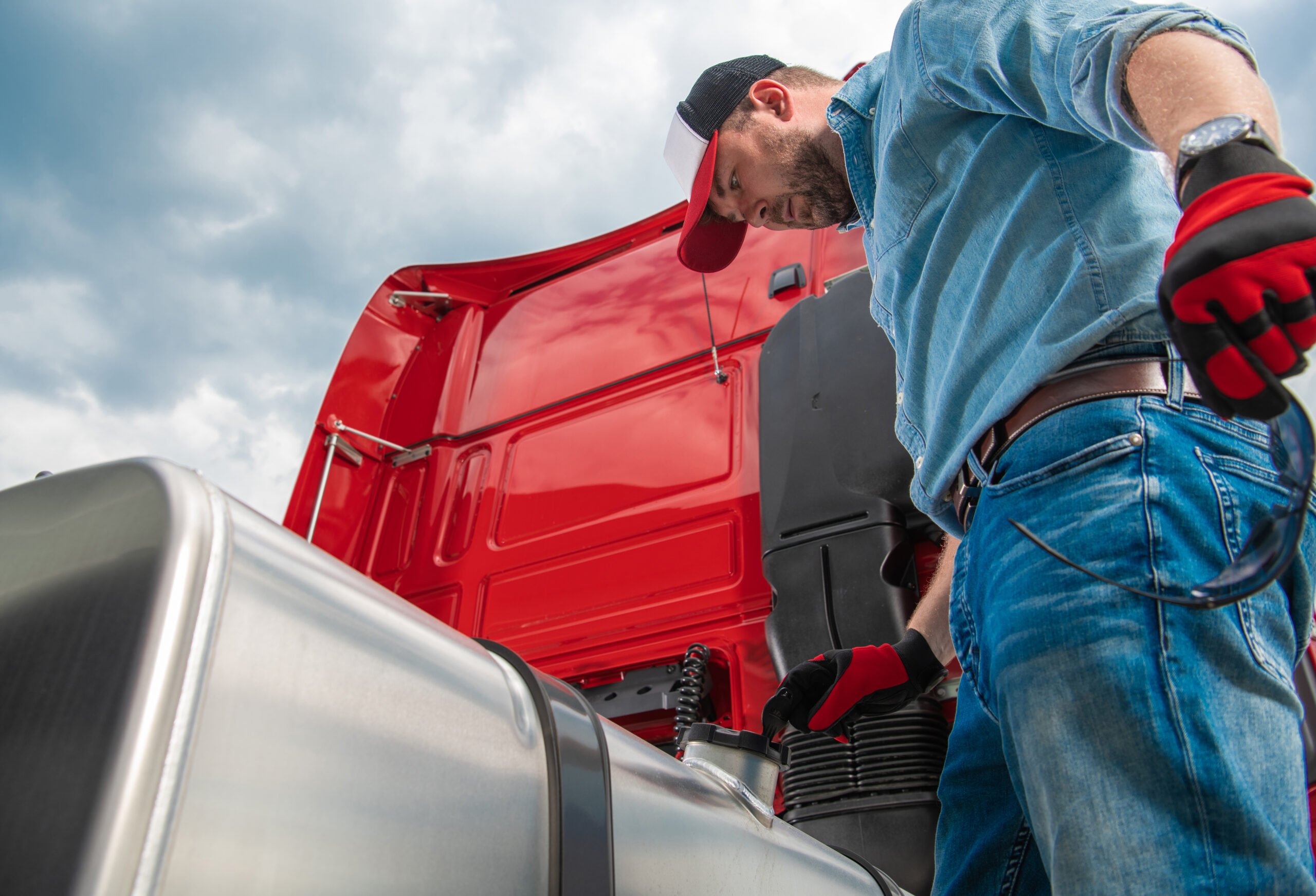
Note: This image is generated using ai. For illustrative purposes only.
The hidden vehicle safety risks inspections miss
These problems usually develop inside systems a driver can’t see on a walkaround, often for hours or days before anything is obvious:
| System | What it means | Why it matters |
| Battery and charging | Voltage below its safe range with the engine running, declining over days | A truck that won’t restart after a stop, or loses electrical power on the road |
| Cooling | Coolant temperature creeping above normal on every trip | Engine derate or shutdown, often on a long climb |
| Lubrication | Oil pressure falling below the minimum at idle, before a critical code | Severe engine damage and a roadside shutdown |
| Air intake | Boost pressure well below what it should be for the fuel being burned | Power loss on grades and in merges |
| Fuel system | Engine running lean, outside its normal air-fuel range | Misfires and power loss |
| Crankcase | Pressure too high for the load, rising over days | Internal engine wear heading toward failure |
| Aftertreatment | DPF regenerations failing or running poorly; DEF and SCR faults | Derates and speed caps at highway speed |
| Tires | Slow pressure loss between inspections | Overheating and tire failure at speed |
None of these may be visible at a pre-trip inspection, and some never set a dashboard warning until the problem is serious.
Real examples from fleet data
In Intangles’ North American fleet data, alerts on these hidden signals have arrived well before the vehicle’s own fault code: about 190 hours ahead for a failing battery, about 60 hours for an overheating engine, about 56 hours for low boost pressure and about 21 hours for low oil pressure. Each of those trucks could have passed a walkaround the morning it failed.
The driver side: risks no inspection can see
Vehicle inspections don’t capture how the truck is being driven, either. Two of the most important driver-side signals only show up in driving data:
- Fatigue, which builds over a shift and over a week.
- Rising risky driving, such as more frequent harsh braking or speeding, which can also wear brakes and tires faster.
For managing driver risk over time, see what to expect in the first 90 days of fleet safety software. For why safety problems often persist even after devices are installed, see fleet safety analytics.
How to combine inspections with vehicle data
- Keep inspections as they are. Pre-trip inspections and DVIRs remain required and catch visible defects.
- Add continuous vehicle monitoring. Vehicle data watches the hidden systems between inspections.
- Send both into one repair process. DVIR defects and predictive alerts become work orders in the same system, with the same owners.
- Triage by urgency: stop now, fix within a day or two, add to the next service, or monitor.
- Share alerts before the next inspection, so drivers and technicians know what to look at.
- Close the loop. Record what was found, so both inspections and alerts get better over time.
For turning alerts into repairs without disrupting your shop, see predictive maintenance alerts. To track whether the process is working, add preventive maintenance compliance to your fleet safety KPIs.
How Intangles catches the risks inspections miss
Intangles is a digital twin company operating in 18 countries, with 500,000+ vehicles on its platform and 96% predictive AI accuracy.
- Developing engine, cooling, battery and aftertreatment faults: predictive health monitoring reads 450+ data signals per vehicle and compares each truck with its own normal behavior, flagging drift before diagnostic trouble codes appear. Fleets using Intangles have seen up to a 75% reduction in powertrain breakdowns.
- Tire pressure loss: monitored through vehicle health monitoring.
- DEF and DPF problems: DEF monitoring and DPF regeneration tracking, with a recommended next step when regenerations fail.
- Fatigue and risky driving: driver behavior monitoring with DriveIQ flags 20+ behavioral exceptions, including harsh braking and overspeeding, and detects signs of fatigue.
- Gaps in monitoring: the InGenious device alerts when it’s unplugged or powered off.
- Repairs that actually happen: operations automation turns alerts into scheduled maintenance tasks.
The device connects through the vehicle’s OBD port with no vehicle modifications. For how Intangles combines vehicle and driver risk overall, see predictive fleet safety. Intangles works with fleets in trucking, transit and waste management.
Discover how Intangles’ integrated fleet intelligence platform catches the vehicle safety risks your inspections can’t see.
KNOW MORE
Frequently Asked Questions
What vehicle safety issues do pre-trip inspections miss?
Pre-trip inspections catch visible and audible defects such as worn tires, brake problems, air leaks and broken lights. They can miss problems developing inside the vehicle: a weakening battery, rising coolant temperature, falling oil pressure, low boost pressure, failing DPF regenerations and slow tire pressure loss. These often look normal at a walkaround and fail later on the road.
Can telematics replace a DVIR or pre-trip inspection?
No. US drivers must inspect the vehicle before driving, and a DVIR must be completed when defects are found, under federal rules. Inspections also catch things vehicle data doesn’t, such as damaged lights or cargo issues. Vehicle data complements them by watching the systems inspections can’t see between trips.
What are the most common vehicle defects found at roadside inspections?
Brakes and tires. In CVSA’s 2026 International Roadcheck, brake systems were the top vehicle out-of-service violation at 24.3%, brake-related violations together accounted for 39.1% of vehicle out-of-service violations, and tires ranked second at 20.9%.
How early can vehicle data warn of a hidden safety problem?
It depends on the fault. In Intangles’ North American fleet data, alerts have come about 190 hours before the vehicle’s fault code for a failing battery, about 60 hours for overheating and about 21 hours for low oil pressure, giving time to repair the truck before it fails on the road.
How do fleets combine DVIRs with predictive alerts?
By sending both into the same repair process: DVIR defects and predictive alerts become work orders with the same owners and urgency tiers, and alerts are shared with drivers and technicians before the next inspection, so they know what to check. Tools such as maintenance scheduling in InRoute Connect help route a vehicle to service before a fault strands it.
Why are hidden vehicle faults a safety risk, not just a maintenance cost?
Because a truck that loses power, shuts down or has a tire fail at speed can cause an incident on the road, not just a repair bill. Catching those faults early keeps vehicles out of dangerous breakdown situations, such as stopping on a busy highway shoulder or losing power in a merge. For the full cost of an incident, see the real cost of fleet accidents.






We’re looking forward to meeting you