KEY TAKEAWAYS
Diesel Exhaust Fluid (DEF) is no longer just an emissions requirement. For fleet operators and fleet companies, it directly impacts compliance, vehicle performance, and uptime. While most fleets understand what DEF is, issues around consumption, quality, and system behavior often go unnoticed until they lead to derates or disruptions. With stricter regulations across markets like the US and India, managing DEF effectively is becoming critical for maintaining consistent operations. Learn how DEF works, why it matters for fleet management, and how better visibility into DEF behavior can help reduce downtime and improve overall fleet performance.
Breakdowns linked to emission systems are becoming more frequent across commercial fleets. In most cases, they do not give clear early warning signals.
A vehicle runs normally for one moment. Then a warning appears on the dashboard. Soon after, power drops. Speed reduces. Deliveries get delayed. What looks like a minor alert often turns into a full operational disruption.
In many of these cases, the underlying trigger is not engine failure. It is emission system behavior linked to Diesel Exhaust Fluid (DEF) that was not monitored closely enough. This is not an isolated issue. According to the American Transportation Research Institute’s latest operational cost analysis, total trucking costs have climbed to $2.26 per mile, with non-fuel costs reaching $1.779 per mile — highlighting how maintenance-heavy and system-driven inefficiencies are now a major cost driver across fleets in both the U.S. and global markets, including India’s high-utilization logistics sector.
The real challenge for fleet operators is not the absence of data. Most fleets today already have telematics, diagnostics, and basic alerts in place. The challenge is that emission-related risks like DEF degradation, dosing variation, and system inefficiencies rarely get acted on early enough to prevent disruption.
These problems rarely happen suddenly. They build over time through small changes such as gradual consumption shifts, sensor inconsistencies, or irregular refill patterns. Most of these signals are visible in data, but they are not acted on until the system triggers a restriction. This is where understanding what DEF is, how it behaves under real fleet conditions, and how it impacts SCR performance becomes critical. In modern diesel operations, DEF is not just a consumable. It directly influences uptime, compliance, and operating cost.
In this blog, we break down what DEF is, how it works in real fleet environments, and why it has become a key factor in controlling downtime and total cost of operations.

What is diesel exhaust fluid (DEF)?
Diesel Exhaust Fluid, commonly referred to as DEF or def fluid, is a non-toxic, colorless liquid used in modern diesel vehicles equipped with Selective Catalytic Reduction (SCR) systems.
Its primary function is to reduce harmful nitrogen oxide (NOx) emissions by up to 90 percent by converting them into nitrogen and water vapor during the exhaust process. According to the U.S. Environmental Protection Agency, DEF is a mandatory component in diesel engines manufactured after 2010 that use SCR technology to meet emission standards.
In practical terms, DEF is what allows diesel engines to remain powerful while still complying with strict emission regulations. It does not change how the engine performs directly, but it determines how long the vehicle can continue operating at full capacity without restrictions.
For fleet operations, this becomes critical. If DEF levels drop, quality is compromised, or dosing becomes inconsistent, the vehicle does not continue normal operation. The system intervenes. Power is reduced, alerts are triggered, and in many cases, the vehicle enters restricted performance mode to maintain compliance.
This is why DEF is not just a consumable fluid. It is a system-level control input that directly affects uptime and delivery reliability. In connected fleet environments, this is also where early detection becomes important. Platforms such as Intangles DEF monitoring systems help fleets move beyond basic level tracking by identifying abnormal consumption patterns and early signs of SCR inefficiency before they turn into downtime events.
What is DEF made of?
The DEF composition is fixed and globally standardized:
- 32.5% high-purity urea
- 67.5% deionized water
This precise mixture is designed specifically for SCR systems to ensure correct chemical conversion inside the exhaust stream. On paper, the formula is simple. In real fleet operations, the challenge is not manufacturing. It is handling.
DEF is highly sensitive to contamination and environmental exposure. Even small contact with dust, fuel, or non-certified containers can impact its purity and lead to system-level issues such as incorrect dosing or sensor faults.
Over time, these small deviations can affect SCR efficiency and trigger unnecessary alerts or derate conditions. This is why proper DEF storage, handling, and monitoring has become an operational requirement rather than just a maintenance guideline.
DEF vs. AdBlue — are they the same?
DEF, AdBlue, and BlueDEF are functionally the same fluid used for SCR systems. The difference is only in branding and regional naming conventions:
- DEF is commonly used in the United States
- AdBlue is widely used in Europe and global OEM supply chains
- BlueDEF is a commercial brand name used in retail markets
All of them follow the same ISO 22241 standard and serve the same purpose in emission reduction systems. For fleet managers, the name is not the operational concern.
The real risk lies in how the fluid is stored, handled, and consumed across vehicles. Even if DEF meets standards at the source, contamination or inconsistent handling in the field can lead to performance issues that are often misdiagnosed as mechanical faults.
This is where system-level visibility becomes important. In modern fleet ecosystems, predictive monitoring approaches such as those used in Intangles DEF monitoring solutions help identify abnormal consumption behavior early, before it impacts vehicle performance or compliance.
How does the DEF system work?
The diesel exhaust fluid DEF system is part of the vehicle’s after-treatment system. Its purpose is to reduce harmful emissions without impacting engine performance under normal conditions.
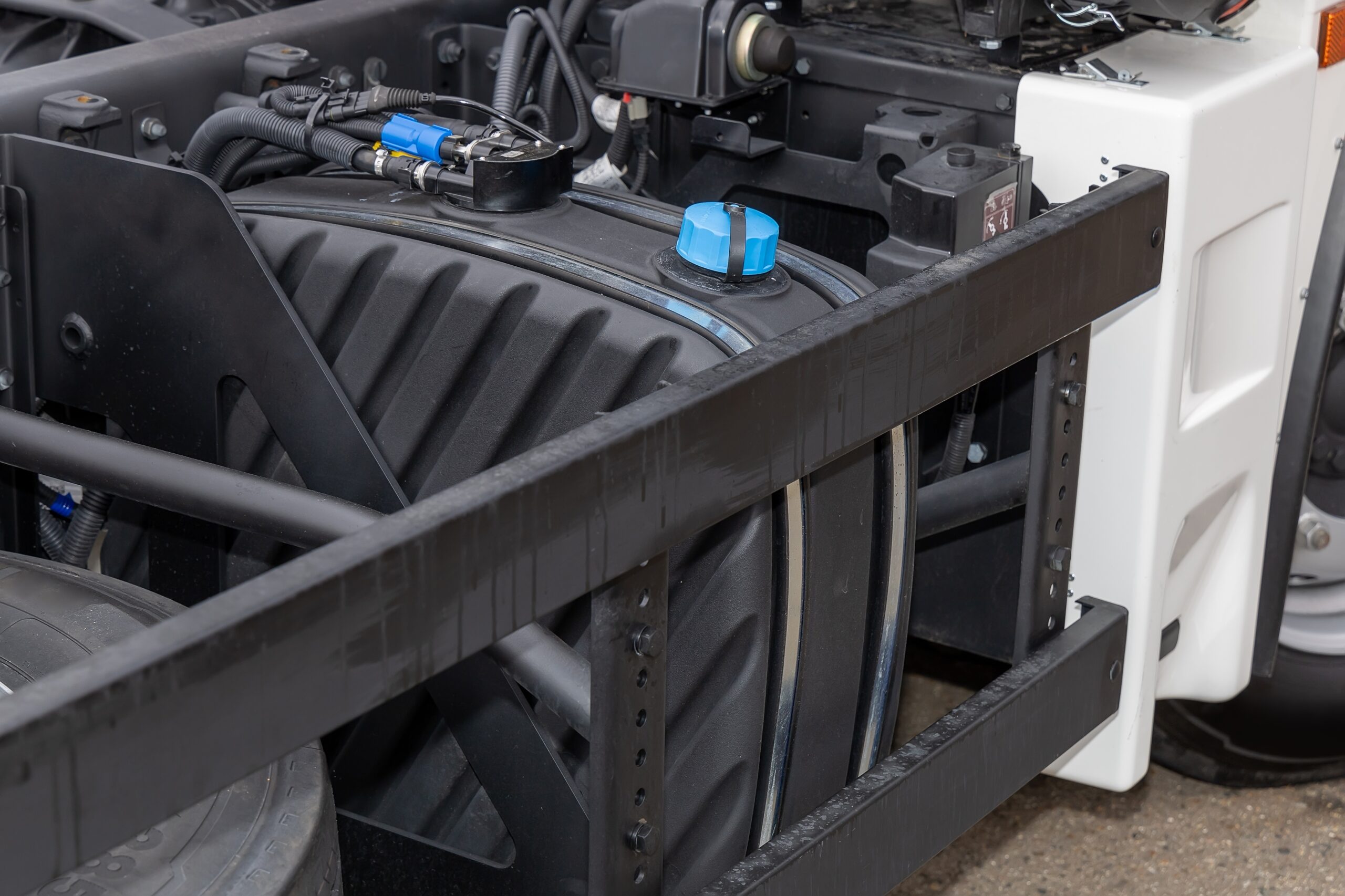
DEF is stored in a dedicated tank and injected into the exhaust stream in controlled amounts. Under high temperatures, it breaks down into ammonia, which plays a key role in the emission control process. This ammonia reacts with nitrogen oxides (NOx) in the SCR system and converts them into nitrogen and water vapor.
While the process is efficient in design, real-world fleet operations are not always stable. Variations in load, driving patterns, and system condition can lead to:
- Uneven DEF dosing
- Sensor inconsistencies
- Irregular consumption behavior
These issues are often not visible in basic monitoring systems until they start affecting performance. Traditional diagnostics detect faults after they occur, but they do not explain gradual deviations in system behavior.
This is where predictive visibility becomes important. Platforms like Intangles’ DEF monitoring solutions help fleets identify early consumption and system-level anomalies before they turn into downtime events.
What is selective catalytic reduction (SCR)?
Selective Catalytic Reduction (SCR) is the core emission control technology used in modern diesel engines. It works directly with DEF to reduce NOx emissions during engine operation. In a DEF SCR system, the emission control process depends on multiple components working together:
- DEF tank
- Dosing module
- SCR catalyst
- NOx sensors
- Control system
Each component plays a role in ensuring that DEF is injected in the correct quantity and at the right conditions for optimal conversion.
The core chemical process in SCR can be represented as:
NOx+NH3→N2+H2O
When the SCR system operates correctly, it can significantly reduce emissions while maintaining engine performance.
However, when performance drops, fleets may see:
- Reduced fuel efficiency
- Inconsistent engine response
- Increased operating cost per mile
Even small inefficiencies in SCR performance can scale into noticeable cost impact over time, especially in high-utilization fleets.
What happens when you run out of DEF?
When DEF levels drop, the system responds in stages to maintain compliance. It starts with a low DEF warning. If not addressed, the engine gradually reduces performance.
If DEF runs out completely, the vehicle enters DEF limp mode, limiting speed and power until the fluid is refilled and the system is reset. In fleet operations, this is one of the most avoidable causes of downtime.
Monitoring DEF usage patterns instead of only checking levels helps fleets predict refill timing more accurately and reduce the risk of unexpected derate events. Predictive systems like Intangles’ DEF monitoring help identify abnormal consumption early, before it impacts vehicle performance.
Why does DEF matter for fleet managers
Effective DEF fleet management is now a core part of day-to-day operations. It is directly tied to how vehicles perform on the road and how consistently they meet emission requirements.
Fleet teams are not just managing fuel efficiency anymore. They are also expected to maintain DEF compliance, control fleet emissions, and prevent unexpected derates that can disrupt schedules and delivery commitments.
These are not separate tasks. They are connected through how well DEF systems are monitored across vehicles in real time.
Without clear visibility into DEF levels, dosing behavior, and system health, fleets are forced into a reactive mode. Issues are only identified after warnings appear or performance drops, which leaves very limited room for prevention.
This is where operational visibility becomes critical. In connected fleet environments, systems like Intangles’ DEF monitoring solutions help shift operations from reactive alerts to early detection of system-level deviations that impact uptime.
Emissions compliance and EPA regulations
Emission regulations are becoming stricter across global markets, and DEF plays a central role in meeting these requirements.
In the United States, EPA diesel emissions standards enforce strict NOx emission limits that depend on SCR systems and accurate DEF usage. These regulations are outlined in the EPA emission standards framework for on-road and non-road diesel engines.
This has significantly increased reliance on DEF quality, dosing accuracy, and SCR system performance.
Modern diesel vehicles are designed to restrict engine performance if emission compliance is not maintained. This means even small deviations in DEF behavior can trigger operational limitations.
For fleet operators, this creates direct exposure:
- Non-compliance can lead to penalties
- Vehicles may face operational restrictions
- Contracts and service reliability can be impacted
In India, BS6 regulations have added similar complexity, making SCR-based emission systems standard across commercial diesel fleets.
As regulatory pressure increases, DEF monitoring is no longer optional. It becomes a compliance requirement tied directly to fleet operability.
Impact on fleet uptime and total cost of ownership
DEF has a direct impact on fleet uptime and operational stability.
Issues such as incorrect dosing, poor fluid quality, or system faults can quickly escalate into warnings, derates, and unplanned downtime events. In high-utilization fleets, even small disruptions can cascade into missed deliveries and reduced asset productivity.
This is where predictive visibility becomes important. Systems like Intangles’ DEF monitoring help fleets detect early-stage anomalies in consumption and system behavior before they lead to performance restrictions.
DEF cost is also not limited to fluid procurement. The real impact shows up across:
- Unexpected maintenance
- Vehicle downtime
- Reduced utilization
- Operational delays
Over time, these factors increase the total cost of ownership of the fleet.
Instead of being treated as a consumable expense, DEF becomes a system-level cost driver linked directly to uptime and efficiency.

What happens if a truck runs out of DEF?
When DEF levels start dropping, the system does not fail immediately. It follows a controlled response designed to maintain emission compliance and prevent regulatory violations.
The first stage is a low DEF warning. This alert signals that the fluid level is approaching a critical threshold and action is required.
If the warning is ignored, the system gradually reduces engine performance. This is where DEF derate conditions begin to appear, limiting vehicle output and operational flexibility.
In the final stage, the vehicle enters truck limp mode, where speed and power are significantly restricted until DEF is refilled and the system is reset.
These stages are not random failures. They are built-in compliance mechanisms in modern diesel engines. In fleet operations, this sequence is often preventable, but it still occurs due to one core issue. DEF consumption is not always monitored as a stable pattern.
On average, DEF usage in diesel trucks is around 2 to 3 percent of total fuel consumption. However, there is no fixed rate.
Consumption varies based on:
- Load weight
- Driving speed
- Terrain conditions
- Engine and SCR calibration
Because of this variability, how often to refill DEF or expected DEF usage per mile cannot be determined with a fixed rule. It changes continuously with operating conditions.
What matters in real operations is not the absolute consumption value, but stability over time. When consumption patterns deviate from the expected range, it often indicates early-stage issues such as dosing inefficiency or SCR system irregularities.
This is where continuous monitoring becomes important. Fleets that track consumption trends instead of only fluid levels are able to detect anomalies earlier and reduce the risk of unexpected derate events.
In connected fleet systems, solutions like Intangles’ DEF monitoring help identify these deviations early by analyzing consumption behavior across vehicles, enabling fleets to prevent limp mode situations before they impact uptime.
How to store, handle, and refill DEF correctly
Proper DEF storage is essential for maintaining the efficiency of SCR systems throughout their operational life. The goal is simple. Keep the fluid stable so its chemical composition remains intact over time.
In practical fleet environments, this means DEF should be stored under controlled conditions, away from direct sunlight and excessive heat. Containers must be sealed properly to prevent exposure to dust, fuel, or any form of contamination during storage or refilling.
The DEF shelf life is generally up to two years when stored under ideal conditions. However, in real operations, shelf life can reduce significantly if handling practices are inconsistent or storage environments are not controlled.
Most DEF-related system issues in fleets do not begin at the engine level. They often start much earlier, during storage or refilling, where minor contamination can affect dosing accuracy and SCR performance later in the system cycle.
Poor DEF handling during transport or tank refilling can introduce impurities that impact emission control efficiency. Over time, this can lead to inconsistent dosing and unnecessary system alerts that affect fleet uptime.
This is why DEF is increasingly being treated as a managed operational input rather than just a consumable fluid in modern fleet systems. In connected environments, platforms such as Intangles’ DEF monitoring solutions help fleets correlate system behavior with consumption and handling patterns to identify early signs of inefficiency.
Can DEF freeze? What to do in cold weather?
DEF has a defined freezing point of -11°C.
Below this temperature, DEF will naturally freeze. This is expected behavior and does not indicate damage or failure in the system. When DEF freezes, the dosing process temporarily stops. The system waits until the fluid returns to liquid form before resuming normal operation.
In cold weather operations, fleet readiness becomes important. Vehicles that are properly maintained and pre-checked are less likely to experience startup issues during extreme temperature conditions.
Freezing itself is not the problem. The risk arises when systems are not adequately prepared for cold-weather operation or when maintenance gaps affect thawing and dosing consistency.
For fleets operating in colder regions, monitoring system health alongside DEF usage patterns helps ensure consistent performance even under low temperature conditions.
How fleet managers can monitor DEF better across vehicles
Manual tracking of DEF does not scale effectively in large fleets. As vehicle count increases, it becomes difficult to capture real-time changes, consumption patterns, or system-level deviations across assets.
Modern DEF monitoring is built on continuous data rather than periodic checks. With fleet telematics DEF integration, fleets can track consumption trends, detect irregularities, and compare performance across vehicles in real time.
Instead of isolated readings, managers get a connected operational view. DEF level tracking becomes centralized, making it easier to identify which vehicles are deviating from expected behavior and why.
This shifts fleet management from reactive response to early intervention. Issues are identified before they escalate into warnings, derates, or performance restrictions.
Using telematics and fleet management software for DEF tracking
Advanced fleet management software integrates DEF into the broader vehicle health ecosystem. It goes beyond level tracking and connects multiple data points to identify emerging risks.
With DEF telematics alerts, fleets receive real-time notifications when consumption patterns or system behavior deviate from expected norms. These alerts are not limited to fault detection. They highlight early-stage anomalies that often remain invisible in traditional monitoring systems.
This enables predictive maintenance DEF, where issues are identified and addressed before they result in derates, breakdowns, or unplanned downtime. Instead of reacting to failures, fleets can act on early signals and maintain consistent operational performance across vehicles.
Systems that combine vehicle data with AI-driven analysis, such as those developed by Intangles, help translate raw telemetry into actionable insights. This shifts DEF management from basic diagnostics to predictive decision-making. The outcome is simple. Better visibility, fewer surprises, and more stable fleet uptime across operations.
The challenge for most fleets is not the lack of data. It is the lack of visibility into what that data is indicating over time. DEF-related issues often build gradually, and without connected insights, they are only noticed once they start affecting performance.
When DEF performance is consistently monitored and studied, such trends will be evident early. Fleets can be alerted for inefficiencies, prevent derates, and ensure their vehicles function without interruption. The difference comes down to visibility and timing. Acting on DEF data before faults occur is what separates stable operations from constant disruptions.
Explore how Intangles’ DEF monitoring solution can help improve fleet performance and speak with our team today.
KNOW MORE
Frequently Asked Questions
Why do fleet vehicles need DEF?
DEF is required in diesel vehicles with SCR systems to reduce harmful NOx emissions and meet emission standards. Without DEF, the system cannot function properly, and the vehicle will restrict performance to remain compliant with regulations.
What happens if a truck runs low on DEF or runs out completely?
When DEF levels drop, the vehicle first shows a low DEF warning. If ignored, engine performance is gradually reduced. If DEF runs out completely, the truck enters limp mode or derate mode, limiting speed and power until DEF is refilled. Monitoring DEF levels in real time through solutions like Intangles can help prevent such disruptions.
How often should fleets refill DEF?
DEF refill frequency depends on usage, but most trucks consume DEF at around 2 to 3 percent of diesel fuel consumption. Actual refill intervals vary based on load, driving conditions, and vehicle usage patterns. Tracking consumption trends with systems like Intangles DEF monitoring can help fleets plan refills more accurately.
Can I run water instead of DEF?
No, water cannot replace DEF. Diesel exhaust fluid has a specific chemical composition required for SCR systems. Using water can damage the system, trigger faults, and lead to costly repairs.
Can I make my own DEF?
No, DEF must meet strict ISO standards for purity and composition. In the United States, diesel exhaust fluid must comply with ISO 22241 standards, while in Europe and India, it is commonly sold as AdBlue under the same specifications. Making DEF manually can lead to contamination or incorrect ratios, which can damage the SCR system and affect vehicle performance.
What is BlueDEF?
BlueDEF is a brand name for diesel exhaust fluid. It performs the same function as any certified DEF and follows the same ISO standards. The difference is only in branding, not in composition or usage.







We’re looking forward to meeting you