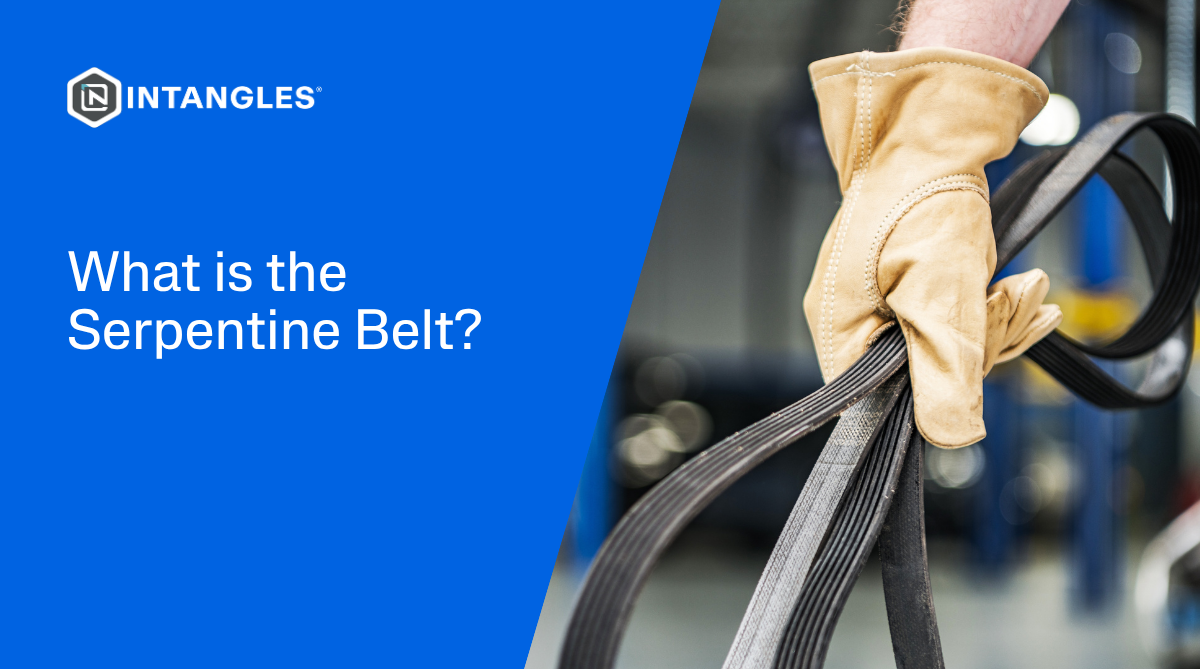
A serpentine belt is a single, continuous belt that transfers power from the engine’s crankshaft pulley to several accessories: the alternator, power steering pump, water pump, and air conditioning compressor, depending on the vehicle. Older cars ran a separate belt for each of those. The serpentine belt replaced that setup with one belt winding around multiple pulleys, which is where the name comes from. When it wears out or fails, you’ll usually see it as an accessory problem, unusual noise, or a sudden loss of charging or cooling. Because one belt is doing the work of several, the fix isn’t always as simple as swapping the belt and calling it done.
KEY TAKEAWAYS
- One serpentine belt often drives several accessory systems at once, though exactly which ones depend on the vehicle. Some newer designs use electric power steering or an electric water pump, taking those off the belt entirely.
- It’s a different part from the timing belt. Confusing the two means skipped maintenance on whichever one gets forgotten.
- Common warning signs include glazing, fraying, unusual squealing or chirping, and rib wear. Modern EPDM belts can wear down without ever showing an obvious crack, though.
- Belt problems often trace back to the tensioner, a pulley, or contamination rather than the belt material itself. Replacing the belt alone doesn’t always fix the underlying issue.
- Vehicle age has a measurable effect on breakdown risk. Preventive inspection matters more as a vehicle racks up years and mileage.
In this guide, we cover what a serpentine belt actually does, how it differs from a timing belt, the warning signs worth catching early, what else in the accessory drive can cause the same symptoms, what replacement really costs, and how fleets are moving from a monthly glance under the hood to continuous accessory-drive monitoring.
Serpentine belt basics at a glance
| Question | Answer |
| What does it do | Transfers power from the crankshaft pulley to several accessories on one belt |
| What can it power | Alternator, power steering pump, water pump, AC compressor, depending on the vehicle |
| How is it different from a timing belt | The timing belt is internal and syncs valve and piston timing. The serpentine belt is external and runs accessories |
| Typical warning signs | Glazing, fraying, squealing on startup, dimming lights, loss of power steering, rib wear |
What a serpentine belt actually does
A serpentine belt is a continuous belt that carries rotational power from the engine’s crankshaft pulley to multiple accessories through a series of pulleys. What it drives depends on the vehicle: alternator, water pump, power steering pump, AC compressor. Some modern vehicles skip belt-driven components altogether, running electric power steering or an electric water pump instead. Gates’ technical guidance on accessory belt systems covers how these belts fit into the accessory drive system.
The belt winds around the crankshaft pulley, the accessory pulleys, the idler pulleys, and the tensioner. The crankshaft supplies the rotational power. The belt carries it to the accessories. The tensioner keeps tension on the belt, and the pulleys guide it along its path.
The belt, tensioner, pulleys, and everything attached to them work as one system, so a problem in one part shows up everywhere else. A worn tensioner or a misaligned pulley can cause belt slip, vibration, or uneven wear, and can wear out a perfectly good belt early. Looking at belt condition alone and stopping there misses most of what’s actually going on.
Serpentine belt vs timing belt
These two get mixed up constantly, and the confusion isn’t harmless. They’re on completely different maintenance schedules, and a mistake in either direction causes real problems.
The timing belt lives inside the engine, behind a cover, keeping the crankshaft and camshaft rotating in sync so valves open and close at the right moment relative to the pistons. On an interference engine, a failed timing belt can let the pistons and valves collide. That’s usually a rebuilt or replaced engine. The serpentine belt sits outside the engine, in plain sight, and drives accessories, not anything related to internal timing. A serpentine belt failure is inconvenient and can strand a vehicle. A timing belt failure on the wrong engine can total it.
Signs a serpentine belt is wearing out
Modern belts don’t always announce themselves the way older ones did, but there are still things to look for. Glazing, a shiny, hardened look on the ribbed side, is one. Fraying edges are another. A squealing or chirping noise on startup, or when the AC compressor or power steering kicks in, is common too, though that noise can mean several things: belt slip, low tension, oil or coolant contamination, a misaligned pulley, a worn tensioner. Dimming headlights or interior lights at idle can mean the alternator isn’t getting consistent power. A sudden loss of power steering assist is one of the more alarming signs, since it changes how the vehicle handles right when it happens.
Older belt materials cracked visibly as they aged, and a lot of maintenance advice still leans on “look for cracks” as the main check. That advice is dated. Most vehicles now run EPDM rubber belts, which resist cracking by design and can run well past 100,000 miles without ever showing one, even while genuinely wearing down underneath. The better indicator on these belts is material loss from the ribs themselves, and that’s harder to catch at a glance. A proper rib-depth check finds it. A quick visual scan usually doesn’t.
What else can cause serpentine belt problems
The belt isn’t the whole system. It’s one part of an accessory drive that also includes a tensioner and several pulleys, and a problem in any of those can look exactly like a bad belt.
A worn tensioner usually gets blamed for squeal and vibration that’s actually coming from the tensioner itself, not the belt. Pulley bearings do something similar. A misaligned or failing one throws noise plus wears one edge of the belt unevenly. Then there’s contamination, which is its own thing entirely: oil, power steering fluid, or antifreeze getting onto the belt makes the rubber swell and lose grip, the same kind of fluid exposure covered in more depth in our diesel engine maintenance guide, and once that’s happened, the belt needs replacing no matter how good it still looks. This is the reason a fresh belt sometimes doesn’t fix anything. If nobody checked the tensioner or pulleys first, the same noise shows back up in a month or two, and the belt was never really the problem to begin with.
Why replacement intervals aren’t one fixed number
Nobody can give you one mileage number that works across every vehicle, and any source that tries is oversimplifying it. How fast a belt wears depends on the belt material, how hot the engine bay runs, how much load the accessories put on it, and the climate it’s driven in. That’s exactly why manufacturers each set their own intervals, and some skip a fixed number altogether and just call for periodic inspection. Your owner’s manual is the real authority here, not whatever number keeps getting repeated online.
Time matters alongside mileage. A belt sitting under the hood for years, even on a car driven relatively little, still goes through heat cycling and possible contamination that affects the rubber regardless of what the odometer says. A hands-on inspection, checking rib depth, looking for contamination, catches more real problems than counting miles ever will.
What a failed belt actually costs
The belt itself doesn’t cost much. What gets expensive is everything it takes down with it. One belt can be running the alternator, the water pump, and the power steering all at once, so losing it can mean losing charging, coolant circulation, and steering assist in the same moment. A car that keeps running without coolant circulating heats up fast, and an overheated engine is a far bigger repair bill than a belt ever was.
Vehicle age plays into how often this kind of breakdown happens. According to AAA’s analysis of roadside assistance data, vehicles 10 years or older were twice as likely to need roadside assistance, and about four times as likely to need a tow, compared with vehicles 9 years old or newer. Engine cooling failures made up roughly 11 percent of the serious breakdowns requiring a tow in that dataset, though that category covers radiators, thermostats, water pumps, and timing belts together, not serpentine belts specifically. The data isn’t belt-specific, but it’s a reason aging accessory and cooling parts deserve attention as a vehicle gets older.
What replacement actually costs
Repair-cost estimators from RepairPal and JD Power put a standard serpentine belt replacement on most cars and light trucks somewhere in the $90 to $300 range for the belt and labor combined. Adding a tensioner to the job, which is common once a belt has been slipping for a while, typically pushes the total closer to $220 to $410, since most of the labor to reach the belt also reaches the tensioner. Diesel pickups, tight engine bays, and European makes tend to land at the higher end of that range or above it.
Heavy-duty commercial trucks don’t have the same kind of published pricing benchmark that passenger vehicles do. Parts alone tend to cost more than a passenger-car belt, and labor runs longer given the larger engine bay and heavier tensioner assembly, so the total realistically lands above the diesel-pickup range noted here. There isn’t a reliable public number to cite for that specific case, which is itself worth knowing: getting an accurate figure means pulling a quote from a shop that works on the specific engine, since heavy-duty pricing varies more by make and drivetrain than passenger vehicle pricing does.
Best practices for staying ahead of belt failure
A hands-on check takes under a minute and catches more than a quick glance ever will. Look for glazing, fraying, contamination, and rib wear during an oil change or any other routine stop. It costs nothing and prevents most surprise failures. Check the tensioner and pulleys at the same time. A belt replaced without addressing a worn tensioner often needs another shop visit soon after.
A new squeal or chirp on startup is worth having checked even if it fades once the engine warms up and seems minor. It can point to several different things underneath.
Following the manufacturer’s schedule beats guessing. Intervals vary by vehicle, and some manufacturers call for inspection rather than a fixed mileage, so the printed maintenance schedule is the better reference, not a rule of thumb from a forum. For fleets running multiple vehicles, tracking belt and accessory-drive condition alongside charging and cooling data catches the kind of electrical and cooling issues that tend to show up together.
Where fleet technology fits into accessory monitoring
A single car owner can get away with a monthly look under the hood. That doesn’t work once you’re running a fleet of dozens or hundreds of vehicles. Manual checks don’t scale that far, and by the time an accessory-drive problem gets noticed, it’s usually because a driver called in stranded, not because someone caught it on a scheduled inspection.
Modern telematics systems pull data straight from a vehicle’s ECU, so battery and alternator voltage and coolant temperature stay visible continuously instead of only at service intervals. A drifting voltage pattern or a coolant temperature creeping upward can flag a fleet before a driver ever reports a symptom. A case involving a waste management fleet shows this in practice: an undervoltage alert caught early enough that the fleet fixed a developing charging-system issue before it caused a breakdown.
How Intangles supports accessory-drive monitoring
Standard accessory-drive maintenance in most fleets runs on two inputs: a scheduled inspection and a driver reporting a symptom. Neither catches much in between. A belt or a charging system can start drifting the week after a shop visit, and nothing flags it until someone notices a noise or a dashboard warning.
Intangles’ predictive health monitoring reads battery and alternator voltage, engine coolant temperature, and other accessory-linked signals continuously from the vehicle’s own data, rather than waiting for a scheduled scan or a driver report. That continuous read is what catches a drifting voltage pattern or a creeping coolant temperature while the vehicle is still on the road and still running fine, well before either one turns into a roadside call.
| Capability | How it supports accessory-drive monitoring |
| Continuous battery and alternator monitoring | Tracks voltage trends fleet-wide, catching charging-system drift before a driver reports dimming lights or a dead battery |
| Coolant temperature tracking | Flags a creeping temperature trend tied to belt-driven water pump or cooling system issues before overheating occurs |
| Fault pattern separation | Distinguishes a one-off reading from a genuine developing issue, so a fleet isn’t chasing every minor fluctuation |
| Maintenance scheduling integration | Routes a flagged vehicle into a planned service visit instead of waiting for a roadside breakdown |
For trucking and logistics fleets, catching that signal early keeps a belt or accessory replacement routine, instead of an overheated engine on the shoulder of a highway.
Explore the platform or get in touch with our team to see how predictive vehicle health data catches accessory, charging, and cooling issues before they turn into a breakdown.
KNOW MORE
Frequently Asked Questions
How often should a serpentine belt be replaced?
There’s no number that works for every vehicle. Go by the manufacturer’s maintenance schedule instead, and check the belt and accessory drive periodically for wear, contamination, or alignment problems rather than counting on mileage alone.
How is a serpentine belt different from a fan belt?
They’re really the same part with an older name. Early vehicles called it a fan belt because it drove the cooling fan directly. Now that one belt usually runs several accessories, not just a fan, “serpentine belt” fits better.
Can you keep driving with a squealing serpentine belt?
Short distance, probably fine. But don’t sit on it. A squeal means the belt’s slipping or something with the tensioner or pulley is already going wrong, and neither one tends to get better by waiting.
What happens if a serpentine belt breaks while you’re driving?
Depending on what it drives on your car, you could lose the alternator, power steering, and water pump all at once. Steering and brakes should still work. Coolant won’t be circulating anymore, though, so get off the road before things start overheating.
Does the serpentine belt have to be replaced along with the water pump?
Not necessarily. If the belt already has to come off to get at the water pump, a mechanic might suggest doing both while it’s apart, since the extra labor is minor. Worth asking directly, since it really depends on the belt’s current condition.




We’re looking forward to meeting you