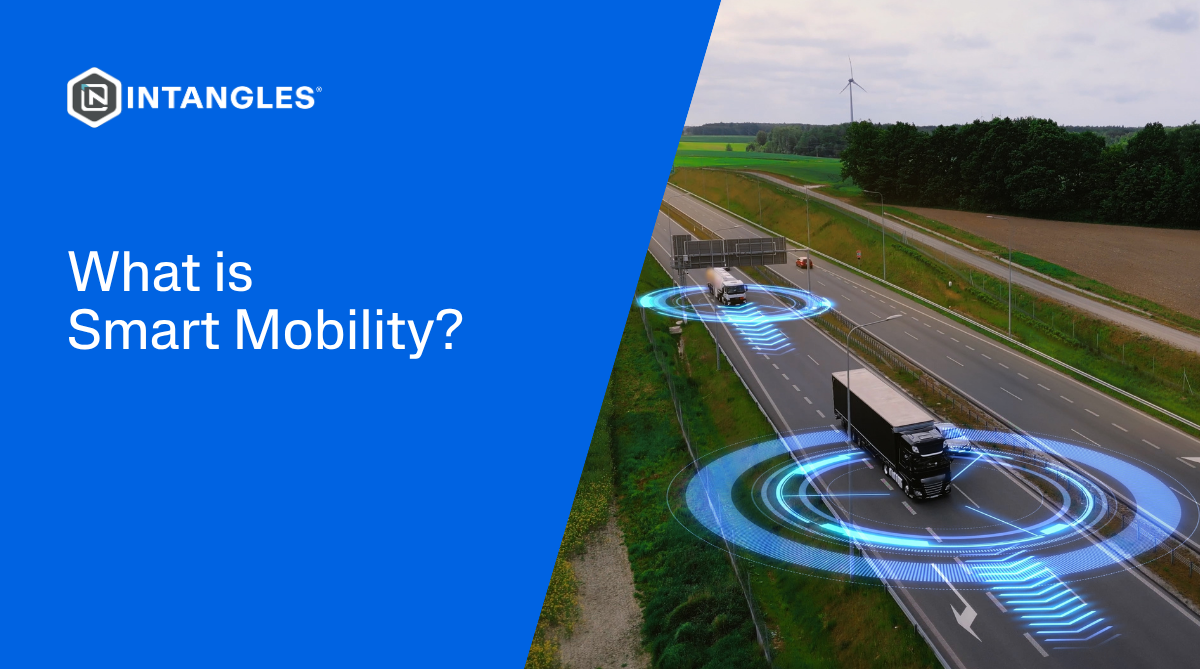
Smart mobility is the use of connected technology, real-time data, and intelligent systems to make transportation safer, more efficient, and more sustainable. In the context of commercial fleets, smart mobility means moving beyond GPS tracking and basic telematics toward predictive analytics, automated decision-making, and vehicles that communicate continuous operational data to the people managing them.
KEY TAKEAWAYS
- Smart mobility is the integration of connectivity, data, and intelligence into transportation systems to improve safety, efficiency, and sustainability.
- For commercial fleets, smart mobility is not a future concept. It is already operational through telematics, predictive vehicle health monitoring, AI-driven driver scoring, and connected dispatch systems.
- The shift from reactive to predictive fleet management is the defining smart mobility transition for US fleet operators in 2026.
- Key enabling technologies include OBD-connected telematics, digital twin modeling, machine learning on ECU data, real-time location tracking, and ELD-integrated compliance systems.
- Smart mobility reduces operational losses from idling, fuel theft, unplanned breakdowns, and driver behavior without requiring fleet operators to replace vehicles or overhaul infrastructure.
In this guide, we cover what smart mobility means for US commercial fleets, the core technologies that enable it, the operational impact in 2026, and how fleet management platforms apply smart mobility principles in practice.
Smart mobility: From urban concept to fleet reality
Smart mobility originally emerged as an urban planning concept, centered on reducing traffic congestion through ride-sharing, public transit integration, and connected infrastructure. Cities like Columbus, Ohio, received federal grants to build smart transportation networks. Singapore developed its Smart Mobility 2030 plan. Barcelona scaled bike-sharing to city-wide coverage.
For commercial fleet operators, the relevant smart mobility story is different. It is not about replacing vehicle ownership or redesigning city infrastructure. It is about transforming how each vehicle in a fleet is monitored, maintained, and managed using the data those vehicles already generate.
A modern Class 8 truck produces thousands of data points per second through its Engine Control Unit (ECU): engine load, coolant temperature, fuel rail pressure, DEF dosing, brake pressure, turbocharger performance, and dozens of other signals. Smart mobility for fleet operators means connecting those signals to intelligence systems that surface actionable decisions, rather than letting that data sit unused on the vehicle’s internal systems.
The 5 core components of smart mobility for commercial fleets
Smart mobility is not a single technology. It is a combination of five connected layers that work together to convert vehicle data into operational intelligence.
| Component | What it does |
| Connected Vehicles | Vehicles transmit real-time operational data through OBD ports or OEM integrations, making every trip, engine state, and fault code visible to fleet management systems |
| Telematics and vehicle diagnostics | OBD-connected devices capture ECU data: engine load, brake pressure, fuel rail pressure, coolant temperature, DEF dosing, and dozens of other signals that reflect the true mechanical state of each vehicle |
| Real-time data platforms | Cloud-based platforms receive, store, and process continuous vehicle data, providing fleet managers with live dashboards, historical analysis, and cross-fleet benchmarking |
| Predictive analytics and AI | Machine learning models identify patterns that precede failures, distinguish normal variation from developing faults, and surface prioritized alerts with guided repair recommendations |
| Operations automation | Maintenance scheduling, configurable alerts, driver performance scoring, compliance documentation, and trip management are automated from actual vehicle and behavioral data rather than manual processes |
Together, these five components enable the shift from reactive fleet management to predictive fleet intelligence.
Core technologies that enable smart mobility
OBD-connected telematics
The OBD port is the entry point for commercial fleet smart mobility. Devices that connect to it capture real-time ECU data and transmit it to cloud platforms. Unlike GPS-only systems that track location, OBD-connected telematics captures the mechanical and operational state of each vehicle continuously.
Digital twin technology
A digital twin is a virtual model of a physical vehicle that mirrors its real-world state in real time, updated with live ECU data. This allows fleet managers to monitor vehicle health, detect anomalies before they cause failures, and analyze operational patterns without physically inspecting the vehicle.
Machine learning on ECU data
Raw ECU data contains thousands of variables. Machine learning models trained on commercial vehicle data identify patterns that precede failures, distinguish normal operating variation from developing faults, and predict component failure timelines. This is the foundation of predictive maintenance.
AI-driven driver performance analysis
Smart mobility platforms monitor driver behavior across dozens of parameters: overspeeding, harsh braking, harsh acceleration, idling, and free-running. Scoring systems normalized for route type, load, and duty cycle make fleet-wide driver comparisons fair and actionable.
Smart mobility in practice: What changes for US fleet operators
The operational shift that smart mobility enables is not theoretical. US commercial fleets in 2026 are managing real costs that connected intelligence directly addresses.
From reactive to predictive maintenance
Traditional fleet maintenance follows fixed intervals: oil changes at set mileage, inspections on a calendar. Smart mobility replaces this with condition-based maintenance driven by actual vehicle health data. A vehicle showing early voltage instability, rising DPF soot load, or declining fuel rail pressure gets flagged before failure, not after a breakdown on a revenue route.
The result: fewer unplanned out-of-service events, lower emergency repair costs, and maintenance schedules that reflect actual vehicle usage rather than manufacturer averages.
Fuel and operational loss visibility
Fuel is typically the largest variable cost in commercial fleet operations. Smart mobility platforms track not just total fuel consumption but idle-attributed waste, theft, cost-per-kilometer deviation from expected performance, and the financial value of each loss category. This converts vague cost concerns into specific, actionable data.
According to the American Transportation Research Institute (ATRI), operational costs for trucking fleets reached record levels in recent years, with fuel among the top cost pressures. Fleets using connected intelligence to track and reduce idle waste and fuel pilferage recover a measurable share of that cost.
Driver safety at scale
In a fleet of 50 vehicles, individual driver coaching is impractical without data. Smart mobility enables systematic driver performance tracking across the entire fleet, identifying high-risk behavior patterns, ranking drivers fairly against peers on similar routes, and targeting coaching where it will have the most impact. Over time, this reduces crash risk, wear-related maintenance costs, and fuel consumption simultaneously.
Compliance readiness
Smart mobility platforms maintain continuous audit trails: fault code histories, maintenance records, driver behavior logs, and operational data. These records support compliance programs aligned with requirements established by the Federal Motor Carrier Safety Administration (FMCSA), including vehicle inspection documentation, hours-of-service recordkeeping, and safety performance monitoring. For fleet operators, maintaining digital records simplifies audits, incident investigations, and ongoing compliance management.
Benefits of smart mobility for commercial fleets
| Benefit | What it means in practice |
| Fewer unplanned breakdowns | Predictive alerts surface developing faults before they cause roadside failures or out-of-service events |
| Lower fuel costs | Idle waste, fuel theft, and cost-per-mile deviations are tracked and quantified, giving fleet managers specific targets to act on |
| Better driver safety | Systematic behavior monitoring across the full fleet identifies high-risk patterns and enables targeted coaching rather than reactive discipline |
| Stronger compliance | Continuous audit trails of fault codes, maintenance records, and driver behavior replace manual records for FMCSA and insurance reviews |
| Higher vehicle utilization | Maintenance scheduled from actual health signals rather than fixed intervals keeps vehicles on the road longer between service events |
| Improved procurement decisions | Route-level and vehicle-level performance data informs spec’ing decisions with real operational evidence rather than estimates |
Smart mobility and the EV transition
The US commercial fleet EV transition is accelerating in 2026, driven by state emissions regulations, federal incentives, and total cost of ownership improvements in certain duty cycles. According to the US Department of Energy’s Alternative Fuels Data Center, fleet electrification is increasingly supported by growing charging networks, vehicle incentives, and advancements in battery technology, making electric vehicles viable for a wider range of commercial duty cycles. Smart mobility platforms are central to EV fleet management: battery health monitoring, state-of-charge tracking, range prediction, and charging cycle optimization all require the same connected, data-driven approach that defines smart mobility for diesel fleets.
The underlying principle is the same regardless of powertrain. A vehicle that communicates its operational state in real time can be managed predictively rather than reactively.
How fleet management platforms enable smart mobility
Effective smart mobility implementation in commercial fleet operations requires a platform that connects to vehicle systems without hardware overhaul, processes ECU data continuously rather than in periodic snapshots, applies machine learning to surface meaningful signals from thousands of data points, and translates those signals into prioritized actions for fleet managers and drivers.
The four operational domains where smart mobility platforms deliver the most measurable value are vehicle health monitoring, fuel management, driver performance tracking, and operations automation. Together these domains cover the full range of controllable costs and compliance obligations in commercial fleet management.
Related blog: What is Smart Mobility? A 2026 Guide for Fleet Managers
How Intangles applies these principles
Intangles is a digital twin company serving the mobility industry across 18 countries, with more than 500,000 vehicles on the platform and a predictive AI accuracy rate of 96%. The InGenious device connects directly to the vehicle OBD port with no modifications or additional sensors required, feeding real-time ECU data into the InRoute platform continuously. Across the fleets it serves, Intangles has helped reduce powertrain breakdown events by 75%.
| Capability | How it helps fleet managers |
| Vehicle health monitoring | Digital twin modeling of engine, aftertreatment, battery and alternator, air intake, and fuel systems. Surfaces fault codes, predictive alerts, and guided repair recommendations before issues become failures. |
| Fuel management and loss quantification | Tracks idle-attributed fuel waste, fuel theft, and cost-per-mile deviation. Maps every operational loss category to a specific financial value. |
| Driver performance tracking | DriveIQ monitors over 20 driver behavior exceptions, normalized per distance and duty cycle for fair fleet-wide comparison and targeted coaching. |
| Operations automation | Maintenance scheduling from actual system health signals, configurable alerts, hub-to-hub trip tracking, and fleet-wide reporting for compliance and operational review. |
In 2026, the enabling technologies for this shift are mature and widely deployable: OBD-connected telematics, digital twin modeling, machine learning on ECU data, and AI-driven driver performance systems. The operational benefits, fewer unplanned breakdowns, lower fuel costs, better driver safety, and stronger compliance documentation, are measurable and immediate.
Explore the platform or get in touch with our team to find out more about how Intangles assists fleets in applying smart mobility principles to vehicle health, operational losses, and fuel economy.
KNOW MORE
Frequently Asked Questions
What is smart mobility?
Smart mobility is the use of connected technology, real-time data, and intelligent systems to improve the safety, efficiency, and sustainability of transportation. For commercial fleets, it means using telematics, predictive analytics, and AI-driven monitoring to manage vehicles and drivers proactively rather than reactively.
What are the core components of smart mobility?
The five core components of smart mobility for commercial fleets are connected vehicles, telematics and vehicle diagnostics, real-time data platforms, predictive analytics and AI, and operations automation. Together they convert raw vehicle data into prioritized operational decisions.
What are the benefits of smart mobility for fleet operators?
Key benefits include fewer unplanned breakdowns, lower fuel costs through idle and theft tracking, better driver safety through systematic behavior monitoring, stronger compliance documentation, higher vehicle utilization, and improved fleet procurement decisions based on real operational data.
Is smart mobility the same as telematics?
No. Telematics provides vehicle data, and it is one component of smart mobility. Smart mobility combines telematics with AI, predictive analytics, digital twin modeling, and operations automation to improve transportation outcomes rather than simply reporting what has happened.
What industries use smart mobility?
Transportation and logistics, construction, mining, oil and gas, utility fleets, field services, public transit, and passenger mobility operators all use smart mobility technologies. In commercial fleet management, the applications span Class 3 through Class 8 vehicles across a wide range of duty cycles.
Can smart mobility work with existing fleet vehicles?
Yes. Most commercial fleet smart mobility platforms use OBD port connections or OEM integrations, allowing operators to deploy connected intelligence without replacing existing vehicles. Installation is typically non-invasive and completed in minutes.
Why does smart mobility matter for US fleet operators in 2026?
US commercial fleets face record operating costs, driver shortages, tightening emissions regulations, and growing FMCSA compliance complexity. According to ATRI, operational costs including fuel have reached record levels in recent years. Smart mobility directly addresses these pressures by reducing unplanned downtime, controlling fuel costs, improving driver safety, and maintaining the audit-ready records that FMCSA compliance and insurance require.




We’re looking forward to meeting you