KEY TAKEAWAYS
- A fuel theft detection system monitors fuel levels, refueling events and vehicle activity together, so drops that don’t match normal driving are flagged as they happen.
- US on-highway diesel reached a record $6.529 a gallon in the week of September 21, 2026, according to EIA, so every stolen gallon now costs more than it did at any point before September 2026.
- Traditional methods, such as fuel sensors with GPS or fuel cards with telematics, show what happened but often surface it late and without context.
- AI-powered systems compare actual fuel use with what each vehicle should be burning for its route, load and driving, and flag deviations such as level drops while the engine is off.
- The strongest setups combine continuous fuel-level data, approved refueling zones and an audit trail for every fuel event.
Fuel theft is no longer an occasional inconvenience. It’s a direct threat to fleet margins, and heading into 2027 it’s more expensive than ever. US on-highway diesel peaked at a record $6.529 a gallon in the week of September 21, 2026, and was still $6.199 on October 5, up from $3.711 a year earlier, according to the US Energy Information Administration. The EIA’s Short-Term Energy Outlook expects diesel to ease to an average of about $4.49 a gallon in 2027, which is still higher than any week of 2025. Small, repeated losses that once looked minor now add up quickly, and they will keep doing so through 2027.
Fuel theft is also harder to spot than it used to be. Traditional monitoring tools show what happened after the fact. Modern fleets need fuel theft detection that flags anomalies as they happen, with enough context to act on them.
That’s where Intangles’ AI-powered fuel monitoring comes in: a next-gen solution built to detect, prevent and reduce fuel pilferage across your entire fleet.
In this blog, you will learn what fuel theft costs a fleet, how traditional detection methods compare with AI-powered systems, the features that matter, how to measure the return, and how to prevent theft, not just detect it.
What does fuel theft cost a fleet?
More than the stolen fuel itself. Before looking at how technology helps, here’s what makes fuel theft such a high-stakes issue:
1. Direct financial loss
Small, repeated losses add up to thousands of dollars per vehicle a year, and at record diesel prices each gallon costs more. Even in 2025, when diesel was far cheaper, fuel cost US trucking fleets 48.2 cents of every $2.336 operating mile, according to the American Transportation Research Institute’s 2026 operational costs update.
2. Operational disruptions
Sudden fuel shortages delay deliveries and reduce vehicle utilization, which directly affects customer satisfaction and profitability.
3. Accountability challenges
Without data, it’s hard to tell whether theft is internal (driver misconduct) or external (siphoning during stops), which makes accountability nearly impossible.
4. Reputational damage
Consistent losses and a lack of control reflect poorly on fleet management, especially in client-facing industries.

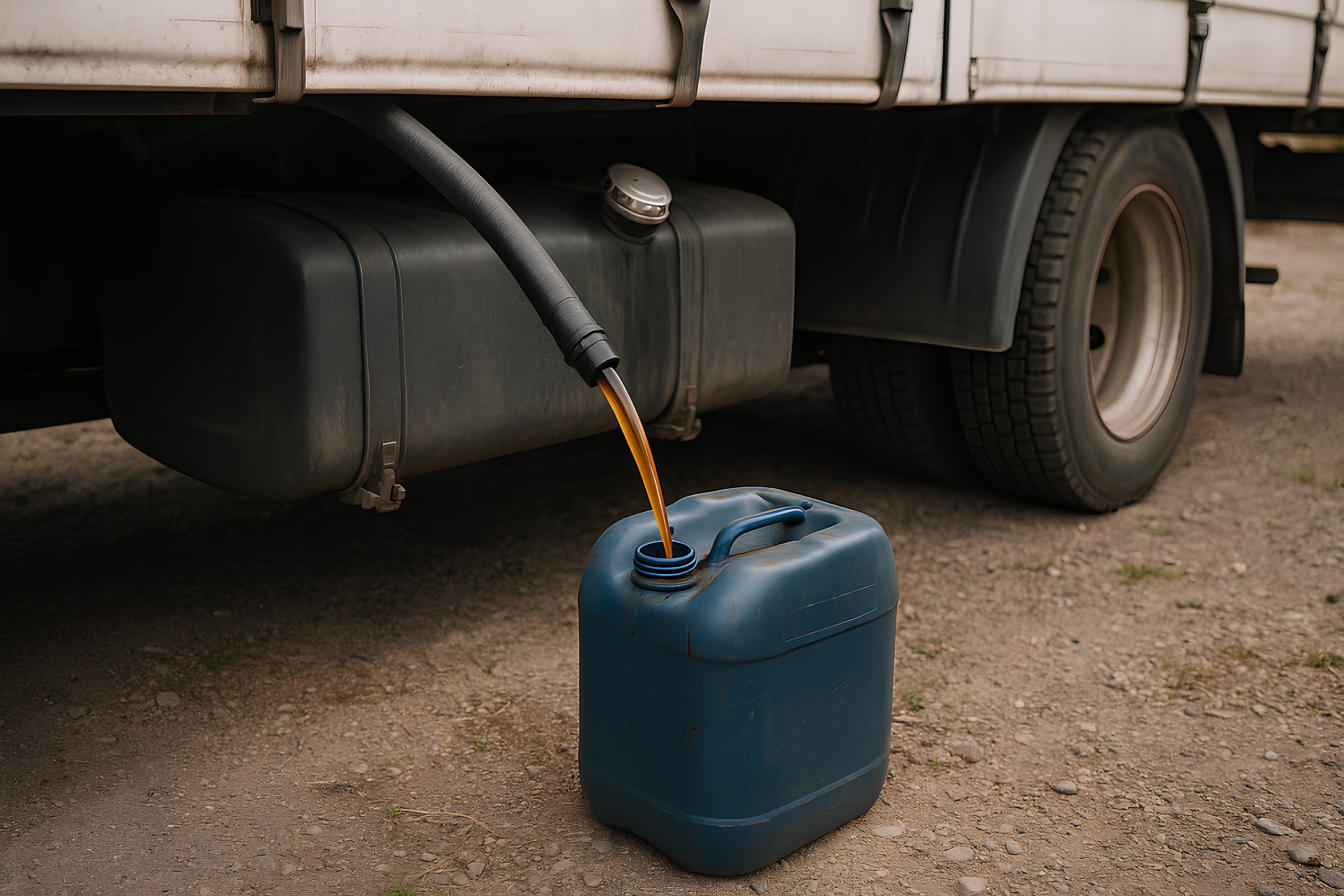
Note: This is an AI-generated image, used for illustration only.
Traditional fuel theft detection methods vs. AI-powered systems
Traditional methods record fuel events; AI-powered systems explain them as they happen. Here are the most common fuel monitoring methods, why they fall short, and how Intangles closes those gaps with real-time AI.
Fuel sensor + GPS integration
One of the most widely used approaches to fuel monitoring combines fuel tank sensors with GPS tracking. This setup lets fleet managers detect sudden dips in fuel level and trace them to a specific location. It’s easy to install, cost-effective and provides a basic layer of theft detection, which is especially useful for small to mid-sized fleets.
However, this method has clear limits. Alerts are often delayed, surfacing only during routine log checks, well after the incident. It offers little or no insight into whether the engine was running, whether the vehicle was stationary or who might have been involved. Without that context, internal misuse can go unnoticed, and investigations often hit a dead end.
With Intangles, fuel level changes are monitored continuously in real time and enriched with context such as engine status, location and vehicle behavior, so any anomaly is flagged the moment it happens.
Using fuel cards and telematics for fuel theft monitoring
Fuel cards are a staple for many fleets, providing spending controls, PIN protection and transaction logs. Paired with GPS data, they add a layer of financial oversight that helps flag suspicious activity, such as refueling outside designated zones or unusually frequent fuel stops. It’s a smart way to manage budgets and track driver behavior at the pump.
But while fuel cards track transactions, they don’t confirm whether the fuel actually reached the tank. Fraudulent swipes or buddy refueling can still slip through. Even combined with telematics, these systems usually require manual reconciliation to match card use with vehicle behavior, which results in delays, gaps and missed theft events.
With an AI-powered system, every refueling event can be checked against the tank level change it should produce, so a fill that doesn’t add the expected fuel is flagged.
AI-powered fuel theft monitoring
Unlike traditional systems that react after the fact, AI-powered monitoring takes a proactive approach. By combining real-time fuel level data, GPS tracking, engine diagnostics and driver behavior, AI models build a detailed digital twin of each vehicle’s fuel consumption profile. This allows continuous comparison between expected and actual fuel use, down to the smallest deviation.
The real strength of AI is its ability to detect subtle, complex patterns that human monitoring or rule-based systems often miss. It doesn’t just watch for sudden drops in fuel level. It understands how much fuel a truck should be using, given its route, load and driving style. Any anomaly, such as an unusual stop, a fill that doesn’t match the tank level or tank depletion while the engine is off, is flagged instantly.
With Intangles, AI doesn’t just detect theft in real time. It also flags patterns, such as repeat locations and times, that show where losses are most likely, so fleet managers can intervene before losses grow.
The Intangles advantage: Predictive fuel theft detection for fleets
Intangles goes beyond basic hardware with an AI-powered system that creates a digital twin for every vehicle. By monitoring real-time fuel levels, engine load, speed, geofenced refueling zones and tank depletion patterns, it delivers intelligent theft detection and operational insights. Intangles uses patented algorithms on the vehicle’s existing fuel sensor data, combined with predictive analytics and driver behavior monitoring, to flag anomalies instantly. Managers receive real-time alerts, access audit-ready reports and spot misuse before it escalates.
Real-time fuel level monitoring
Continuous monitoring of the vehicle’s fuel level data flags any unusual dip, whether the vehicle is parked or in transit.
Geofenced refueling zones
Fleet managers can define approved fuel stations and depot zones. Any fueling activity outside these mapped areas automatically generates an alert.
Driver behavior tracking to prevent fuel theft
Each fueling event is linked to the vehicle, time and location, and to the assigned driver where driver ID is set up, creating a clear audit trail and stronger accountability.
Predictive analytics
The system learns what “normal” looks like for every truck. Using AI, it predicts fuel use based on route, speed, cargo weight and driving behavior, and raises an alert when actual use deviates from the pattern. The same data can also reveal mechanical causes of high consumption, such as fuel rail pressure problems.
Audit-ready reports
Intangles captures time-stamped data, route history and fuel events, which makes investigations faster and more conclusive. Whether it’s theft or inefficient refueling, the proof is built in.
Multi-source integration
Intangles brings GPS data, engine telemetry and vehicle activity into one platform, so no suspicious event goes unnoticed.
Scalability
Intangles runs across 500,000+ vehicles in 18 countries, from single-vehicle operators to large fleets.
Most platforms are reactive. Intangles is predictive and proactive, detecting threats as they occur and helping prevent losses before they grow.

The ROI of a fuel theft prevention system
Investing in fuel theft prevention isn’t just about stopping fuel losses. It’s about improving fuel visibility, operational control and accountability across the fleet.
When fleets can monitor fuel consumption in real time, detect anomalies quickly and investigate suspicious events with confidence, the impact goes beyond theft reduction.
Key benefits include:
- Lower fuel losses through earlier detection of drops, unauthorized fills and abnormal consumption
- Fewer manual audits and faster fuel reconciliation
- Stronger driver accountability and a clear audit trail for investigations
- Better refueling and routing decisions that cut unnecessary stops
To estimate the return for your fleet, multiply annual fuel spend by the share of losses you expect to recover, and subtract the system cost. At record diesel prices, even small recovery rates pay back quickly. Use the fleet savings calculator to run your own numbers.
Fuel theft remains one of the most persistent and costly challenges in fleet operations. Traditional monitoring methods can identify losses after they occur, but modern fleets need real-time visibility and predictive intelligence to detect suspicious fuel events as they happen.
By combining fuel monitoring, vehicle telematics, GPS tracking and driver behavior analytics, fleet operators can move from reactive investigations to proactive fuel management. The result is stronger fuel accountability, fewer losses, better operational efficiency and tighter control over fuel costs.
For India-specific theft methods and controls, see diesel theft in Indian fleets. For the mistakes that leave fuel losses undetected, see the 5 fuel monitoring mistakes costing your fleet.
Intangles is a digital twin company working with fleets in trucking, construction and mining. By correlating fuel data with vehicle activity, driver behavior, route information and operating conditions, Intangles provides the visibility needed to identify potential fuel theft, reduce preventable losses and optimize fuel performance across the fleet.
Discover how Intangles’ fuel monitoring can detect fuel theft as it happens and give your team the evidence to act on it.
KNOW MORE
Frequently Asked Questions
How can fleet managers detect fuel theft?
Fleet managers can detect fuel theft using fuel level sensors, GPS tracking, fuel card monitoring and AI-powered fuel monitoring systems. Modern solutions combine fuel data with vehicle telemetry and location information to identify suspicious fuel events in real time.
What are the most common types of fuel theft in fleets?
Common types of fuel theft include siphoning fuel from tanks, unauthorized fuel card use, fuel purchases for non-company vehicles, false fuel claims, and theft during vehicle stops or overnight parking.
How does an AI-powered fuel theft detection system differ from traditional fuel monitoring?
Traditional systems rely on fuel sensors and GPS to flag sudden level drops, but alerts are often delayed and lack context. An AI-powered system like Intangles continuously cross-references fuel levels with engine status, route data and driver behavior in real time, detecting anomalies the moment they occur, not hours later during a manual log review.
How quickly does a fuel theft detection system deliver ROI?
ROI depends on how much fuel a fleet is losing and how quickly alerts are acted on. Multiply annual fuel spend by the share of losses the system helps recover, then subtract its cost. With US diesel above $6 a gallon since mid-September 2026, according to EIA, even a small recovery rate can cover the system cost quickly.
What are the benefits of fuel theft prevention systems?
Fuel theft prevention systems help reduce fuel losses, improve driver accountability, increase operational transparency, simplify fuel audits, optimize fuel management processes and improve overall fleet profitability.
How do AI-powered fuel monitoring systems work?
AI-powered fuel monitoring systems analyze fuel levels, vehicle activity, route data, engine performance and driver behavior to establish normal fuel consumption patterns. When fuel use deviates from expected behavior, the system automatically flags the anomaly and alerts fleet managers.
How can fleets prevent fuel theft, not just detect it?
Prevention combines technology with controls: approved refueling locations with alerts for fills elsewhere, fuel cards tied to vehicles instead of cash, continuous fuel-level monitoring with alerts for drops while parked, approved overnight parking locations, and a weekly review of flagged events with each driver. Detection data shows where losses happen; the controls stop them repeating.






We’re looking forward to meeting you