KEY TAKEAWAYS
Fleet operations in India generate continuous vehicle data through OBD systems and telematics platforms, but the real value comes from turning this data into actionable intelligence. In this blog, we break down how AI and OBD together help fleet managers improve maintenance decisions, reduce breakdowns, and enhance overall operational efficiency.
Where is fleet health actually being managed today, and more importantly, why do breakdowns still happen despite having vehicle data?
Across India, more than 50 lakh+ commercial vehicles operate under high-pressure conditions, with nearly 70% of freight movement dependent on road transport. Most fleets today already use on-board diagnostics India systems and OBD telematics to monitor vehicle performance. But access to data isn’t the real problem.
The bigger challenge is using that data to prevent breakdowns, control maintenance costs, and improve uptime before failures occur. Industry estimates suggest that a single vehicle breakdown can cost anywhere between ₹15,000 to ₹50,000 per day, depending on route and load conditions. This is where vehicle diagnostics is evolving.
What started as basic fault detection through OBD is now shifting toward intelligent, AI-driven vehicle health monitoring systems that can predict failures, not just report them.
In this blog, we break down how OBD works, where it falls short in Indian conditions, and how combining it with AI is transforming fleet operations from reactive maintenance to predictive control.
Understanding OBD-II in Indian commercial vehicles
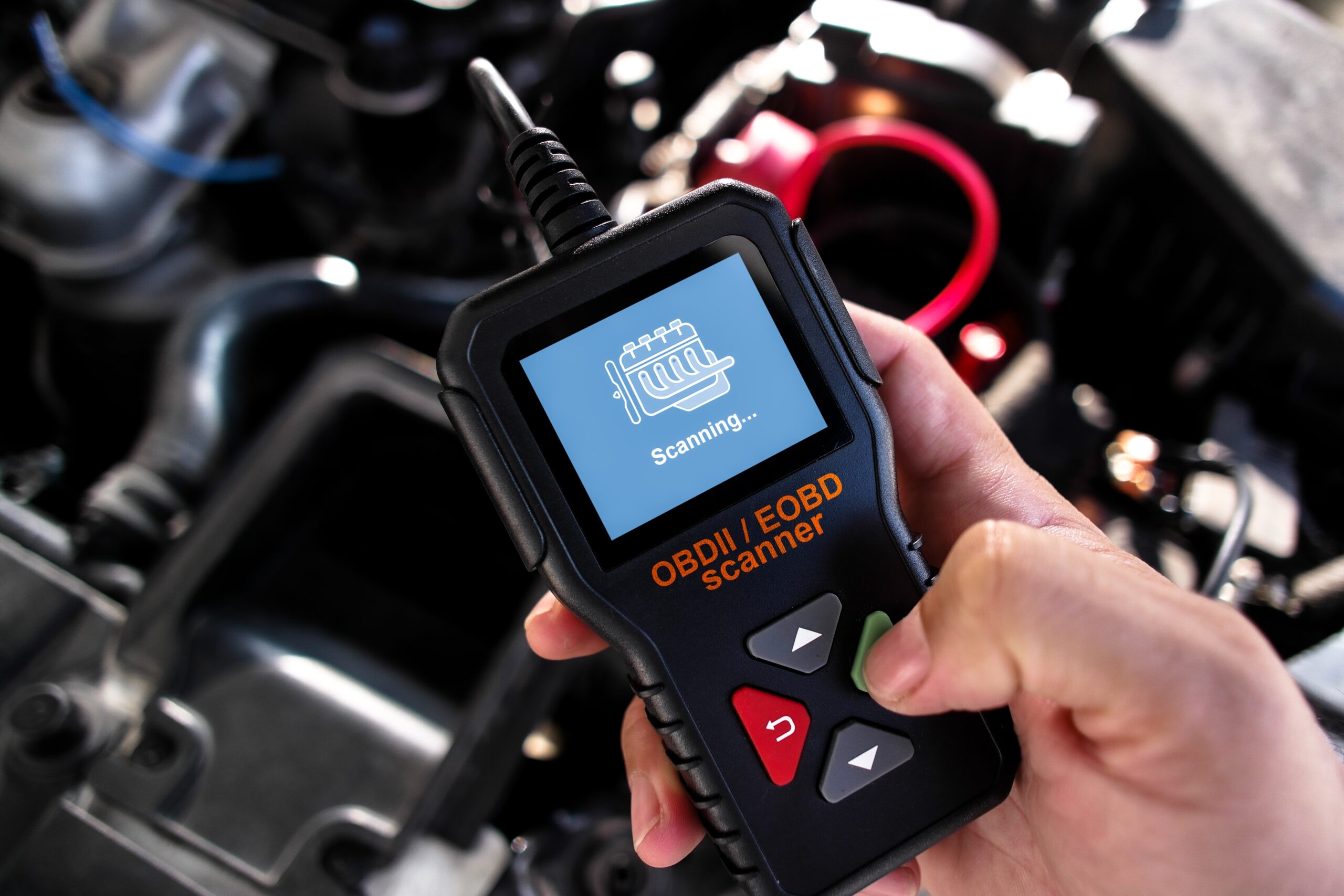
OBD-II is a standardized diagnostic interface that provides direct access to a vehicle’s internal systems. It captures critical parameters such as engine performance, fault codes, emissions data, and real-time operating conditions through the OBD-II port in India trucks.
In practical terms, it marked the first structured step toward on-board diagnostics India adoption, where vehicles moved from purely mechanical systems to data-enabled machines.
In India, structured adoption gained momentum with the BS-IV OBD mandate, where emission monitoring became mandatory across commercial vehicles. This shift meant that OBD India commercial vehicles could now generate real-time diagnostic data instead of relying only on physical inspections or breakdown-based maintenance.
This created a foundational layer of visibility into engine health, fuel efficiency, and compliance—but visibility alone did not solve operational inefficiencies.
What OBD-II provides and where it falls short
OBD-II provides a starting point for fleet visibility, not a complete view of vehicle health.
It enables access to:
- Engine fault codes and diagnostic trouble alerts
- Core engine parameters such as RPM, coolant temperature, and throttle position
- Emission-related data required under regulatory standards
For fleets, this was a significant shift from reactive maintenance to basic real-time monitoring. However, the limitations are structural.
OBD-II does not explain why a failure is occurring. It does not indicate whether a component is likely to fail in the near future. It does not connect vehicle performance with driver behavior, load conditions, or route stress. Most importantly, it does not correlate multiple signals to build a unified view of vehicle health.
In simple terms, OBD-II identifies that something has failed. It does not identify what is about to fail or what caused the failure pattern in the first place.
This gap is where traditional diagnostics end—and where fleet telematics and deeper analytics begin to matter, turning raw fault codes into actionable operational insight.
How OBD evolved in India from BS-IV to BS-VI
The evolution of OBD in India has been closely tied to emission norms and regulatory upgrades.
- BS-IV: Introduced structured diagnostic monitoring across vehicles, enabling basic fault detection and emission tracking.
- BS-VI: Expanded capabilities with stricter emission norms and real-time monitoring requirements
- Post BS-VI: OEMs began integrating additional sensors and deeper electronic control systems for improved diagnostics.
Each phase increased the volume of data available from vehicles. However, this evolution primarily improved data collection, not decision intelligence.
Fleets gained access to more signals, alerts, and parameters, but operational inefficiencies such as breakdowns, unplanned downtime, and reactive maintenance cycles continue to persist. This creates inflection points in fleet operations: more data does not automatically translate into better decisions.

How AIS 140 compliance shaped telematics in Indian transport
The introduction of the AIS-140 India regulation marked a major shift in how commercial vehicles were monitored across the country. It mandated the use of GPS tracking systems across public and commercial transport fleets, making location visibility a standardized requirement.
In most deployments, fleets adopted an AIS 140 GPS tracker with OBD integration, combining location tracking with limited vehicle-level diagnostics. This led to the large-scale rollout of telematics in Indian transport, enabling basic operational visibility across fleets.
At a functional level, this systems provided:
- Real-time vehicle location tracking
- Basic operational alerts
- Limited diagnostic and status signals
This was a significant step forward in fleet digitization. However, AIS-140 is fundamentally a compliance-driven framework, not an intelligence system.
While it improved visibility, it did not improve decision-making. Fleets gained access to data streams, but not the analytical capability to interpret them in operational context. As a result, large volumes of fleet data are now generated daily, but only a fraction is actively used for improving uptime, maintenance planning, or cost control.
This creates a clear gap between tracking vehicles and understanding vehicle health, which becomes increasingly critical as fleet complexity grows.
Why India’s fleet challenges demand more than basic OBD
The India fleet challenges are shaped by highly variable and high-stress operating environments. Unlike controlled conditions assumed by traditional diagnostic systems, Indian fleet operating conditions include extreme weather, uneven terrain, congestion, and inconsistent load behavior.
In this environment, OBD systems can detect faults, but they cannot explain why those failures keep repeating. This creates a gap between diagnostics and real operational understanding.
Extreme operating conditions in Indian fleets
Vehicles in India operate under continuous environmental and mechanical stress.
High temperatures, dust exposure, traffic congestion, and long operating hours accelerate wear across critical components such as brakes, engines, and cooling systems. Over time, this leads to faster degradation cycles compared to standard expectations.
While OBD systems can detect failures or threshold breaches, they cannot interpret the operating context behind them. As a result, alerts remain reactive, not preventive—limiting their impact on India fleet maintenance challenges.
Fuel quality and engine degradation risks
Fuel variability remains a persistent issue across India commercial vehicle problems.
Inconsistent fuel quality and occasional adulteration directly affect combustion efficiency, leading to injector clogging, irregular mileage patterns, and increased engine stress. These issues often develop gradually and are difficult to isolate using standard diagnostic signals alone.
As a result, fleets often respond to symptoms rather than addressing the underlying cause of performance decline.
Overloading and long-term vehicle damage
Overloading continues to be a common operational practice across freight movement in India due to short-term economic incentives.
However, the long-term impact on vehicle systems is significant. Suspension systems experience accelerated fatigue, braking efficiency reduces under sustained load pressure, and engine components operate under continuous strain.
Over time, these stresses accumulate, resulting in unexpected breakdowns and higher lifecycle maintenance costs—turning operational efficiency gains into long-term losses.
Mixed fleet complexity in India
Most fleet networks in India are heterogeneous, operating a mix of BS-III, BS-IV, and BS-VI vehicles.
Each category differs in sensor depth, diagnostic capability, and data availability. This creates fragmentation in visibility and makes it difficult to maintain consistent decision-making across the fleet.
As a result, India fleet technology needs are no longer limited to tracking or basic diagnostics. They now require systems that can unify data across vehicle types and generate a consistent view of fleet health.
The core challenge in Indian fleet operations is not data collection. It is the interpretation of that data in real-world operating environments—one of the most persistent Indian fleet maintenance challenges today.
This gap between visibility and understanding is what limits traditional diagnostics from improving uptime, cost efficiency, and long-term fleet performance.
Why OBD and AI is critical for modern fleet operations in India
The behavior of vehicles in India is not uniform. It changes based on route conditions, driver behavior, load variations, and operating environments. This variability is one of the key reasons why OBD alone is not sufficient for long-term fleet control.
OBD systems are effective at identifying faults, but they operate in isolation. They do not interpret patterns or explain why failures are repeating. When AI is layered over OBD data, fleets move beyond fault detection and into continuous vehicle understanding. This is where vehicle health monitoring India begins to shift from reactive tracking to predictive intelligence.
Vehicle health monitoring at component level
With AI applied on top of OBD and sensor data, vehicle health can be understood at a much more granular level. Instead of viewing the vehicle as a single unit, each component starts forming its own performance profile over time.
This changes how fleets interpret degradation. A component does not simply fail suddenly. It shows patterns of stress that build up gradually, often influenced by usage and operating conditions. AI helps surface these patterns early, before they turn into breakdowns.
What changes is not just visibility, but timing. Issues are identified earlier in their lifecycle, which allows fleets to intervene before failures impact operations. This improves reliability and reduces unexpected downtime.
Predictive maintenance based on real vehicle usage
Traditional maintenance planning assumes that vehicles degrade uniformly over time. In real fleet operations, usage is highly uneven. Some vehicles operate under heavy load daily, while others follow shorter or less demanding routes.
This is where fleet predictive maintenance India becomes critical. When OBD data is combined with AI models, maintenance shifts from being time-based to usage-based.
Instead of servicing vehicles at fixed intervals, fleets can align maintenance with actual wear patterns. This reduces unnecessary servicing and ensures maintenance happens when it is truly required. Over time, this leads to lower operational costs and more efficient resource allocation across the fleet.
Connected intelligence across vehicle, driver, and route
Most fleet issues are not caused by a single factor. They emerge from the interaction between driver behavior, route conditions, and vehicle health. Without connecting these data points, fleets only see fragments of the problem.
AI helps bring these signals together into a unified view. With AI vehicle tracking India, fleets can understand how driving patterns impact vehicle performance and how specific routes contribute to faster wear.
This connected intelligence makes it possible to identify recurring operational risks. For example, certain routes may consistently lead to higher engine stress, or specific driving behaviors may correlate with faster component degradation.
Once these relationships are visible, fleets can move from reacting to breakdowns to preventing them through informed operational changes.
From reactive repairs to predictive fleet control
When OBD and AI work together, the nature of fleet operations changes fundamentally. Instead of responding after a failure, fleets can anticipate issues before they occur. Maintenance becomes planned rather than urgent. Downtime becomes scheduled rather than unexpected. Decisions are based on condition rather than assumption.
This is the core value of combining diagnostics with intelligence. It is not just about collecting more data. It is about using existing data to understand vehicle behavior and improve operational control.
This is also where platforms like Intangles’ vehicle health monitoring extend value further, by unifying OBD, CAN, GPS, and sensor inputs into a single predictive system that supports decision-making at scale.
Use cases: how fleets are using OBD data today
In India, fleet operators are increasingly using on-board diagnostics India systems for real-world operational decisions. While OBD data is still limited in scope, it has already become useful in improving visibility across vehicle performance, maintenance needs, and operational efficiency.
However its value is primarily in detection and reporting. The interpretation layer still remains limited, which is why most fleets use it as a supporting input rather than a decision system.
Reducing breakdowns and roadside failures
One of the most common applications of OBD data is early fault detection. Alerts related to overheating, battery issues, or engine misfires help fleets identify potential failures before they escalate.
This allows maintenance teams to act while the vehicle is still in operation or at a scheduled stop, instead of reacting to breakdowns on highways or long-haul routes. In practice, this reduces unplanned downtime and improves vehicle availability across operations.
However, these alerts remain event-based, not predictive. They indicate failure conditions but do not always explain recurrence patterns.
Improving fuel and emissions performance
OBD data also plays a role in monitoring fuel consumption and emission-related performance across vehicles, routes, and drivers.
Fleet operators use this information to identify inefficiencies such as excessive fuel usage or deviation from expected mileage patterns. This becomes especially important for compliance with BS-VI emission standards and cost control in high-fuel-share operations.
While this improves visibility, it still operates at a reporting level rather than a corrective or predictive level.
Detecting abuse and misuse
Driver behavior has a direct impact on vehicle health and operating costs. OBD data helps identify patterns such as harsh acceleration, sudden braking, excessive idling, and unauthorized route usage.
These insights help fleets reduce operational misuse and improve driving discipline over time. In many cases, this also contributes to fewer mechanical failures caused by improper vehicle handling.
Driver behavior monitoring systems, including solutions like Intangles driver safety monitoring, build on this foundation by adding structured behavior scoring and risk interpretation.
Supporting warranty, insurance, and resale
Historical OBD data creates a digital record of how each vehicle has been used over time. This improves transparency in warranty claims and helps validate insurance processes with usage-backed evidence.
In resale scenarios, vehicles with consistent performance records and well-documented maintenance histories tend to retain higher value compared to vehicles with limited or unclear data history.
This makes OBD data not just an operational tool, but also a financial and asset-value enabler for fleet owners. It delivers clear operational benefits, it is still largely analyzed in isolation.
It provides signals, but not system-level intelligence. This is where its limitations become visible in complex fleet environments, setting the stage for more integrated AI-driven approaches to vehicle health management.

How Intangles turns OBD and CAN data into a vehicle health “brain”
Most fleets already generate large volumes of data. The challenge is not availability, but fragmentation. OBD systems capture faults, GPS tracks location, and sensors record operational signals, but these data streams often exist in silos.
On their own, they provide partial visibility. They do not explain how vehicle behavior, operating conditions, and component health are connected. This is where Intangles vehicle health monitoring takes a fundamentally different approach. Instead of treating data as isolated inputs, it builds a unified intelligence layer where every signal contributes to a continuous understanding of vehicle health.
The system combines inputs from OBD, CAN bus data, GPS movement patterns, and sensor streams such as fuel level, tyre pressure, and temperature to form a single operational view of the vehicle.
Data fusion across OBD, GPS, CAN, and sensors
The key shift is not in data collection, but in data interpretation. Rather than switching between multiple dashboards, all signals are integrated into a deep telematics analytics platform that consolidates vehicle behavior into one view. This removes noise and helps surface patterns that are otherwise invisible.
A fuel drop is no longer treated as an isolated event. It can be linked to route conditions, driving behavior, or load variation. Similarly, a fault code is not just a warning signal—it is interpreted in the context of usage history and operating stress.
This connected layer is what enables AI vehicle health India applications to move from reactive alerts to structured decision support.
Digital twin for real-time vehicle health monitoring
At the core of this system is a digital twin-style model, where each vehicle is represented as a continuously evolving digital counterpart.
Instead of static records, the vehicle becomes a live model that updates with every trip, capturing how components behave under real operating conditions.
Through this model, fleets gain access to:
- A real-time health score for each vehicle
- Component-level risk indicators that evolve over time
- Predictive alerts that identify likely failure points before breakdowns occur
This is where vehicle intelligence becomes operational. Issues are no longer detected after failure. They are anticipated based on degradation patterns and usage context.
For fleets using Intangles’ digital twin capabilities, this enables a shift from maintenance scheduling to condition-based intervention.
From data visibility to operational intelligence
The real shift is subtle but significant. Fleets move from reacting to breakdowns to anticipating them. Maintenance decisions become targeted, downtime becomes predictable, and operational planning becomes data-driven rather than assumption-based.
Instead of managing vehicles as individual assets, fleets begin managing them as a connected system of behaviors, components, and conditions.
This is where fragmented telematics ends, and unified vehicle intelligence begins.
How to implement a vehicle health monitoring system in fleet operations
Moving from basic diagnostic systems to AI-driven monitoring does not require a complete infrastructure overhaul. Most fleets already have the foundational components in place, including AIS-140 devices, OEM connectivity, and OBD-based systems.
The shift is less about adding more tools and more about using existing data more effectively through a structured OBD telematics rollout approach.
Step 01: audit existing fleet data systems
The first step is to identify what is already available within the fleet ecosystem.
In many cases, fleets already operate a mix of AIS-140 trackers, OEM telematics connections, and aftermarket OBD devices. However, this data often remains underutilized or disconnected across systems.
A clear audit helps map existing data sources, avoid duplication, and establish a foundation for implementing a structured vehicle health monitoring system.
Step 02: run a predictive maintenance pilot
Scaling across the entire fleet at once often creates noise rather than clarity.
A better approach is to start with a defined pilot group. This could include vehicles operating on high-risk routes, older vehicles with higher breakdown frequency, or specific OEM categories.
A focused predictive maintenance pilot helps validate whether early alerts improve uptime, reduce breakdowns, and enhance maintenance planning before wider rollout.
Step 03: define fleet performance KPIs
Without defined metrics, fleet visibility does not translate into operational value.
Key KPIs typically include breakdown frequency, maintenance cost per kilometer, fuel consumption trends, and overall vehicle uptime. These indicators help measure whether the system is delivering real operational improvements.
Tracking these KPIs ensures that decisions are based on measurable outcomes rather than assumptions, especially during early-stage implementation of AI-based monitoring systems.
Step 04: integrate insights into fleet workflows
Data alone does not improve fleet performance. The real impact comes when insights are integrated into operational workflows.
This includes connecting alerts and diagnostics with existing telematics platforms, maintenance systems, and workshop processes. Equally important is defining clear response workflows—who acts on an alert, how quickly action is taken, and what resolution steps are followed.
Without this integration, even advanced monitoring systems remain underutilized.
The shift from reactive maintenance to predictive control is not driven by lack of data, but by how effectively that data is used.
The impact builds over time. Breakdowns reduce not just because faults are detected earlier, but because patterns across the fleet start becoming visible. Maintenance becomes more targeted, and operational planning becomes more predictable.
In most fleet environments, the data required to enable this already exists. AIS-140 systems, OBD inputs, and OEM telemetry already generate continuous signals. The gap is not in availability, but in how effectively that data is translated into action.
When fleet decisions shift from reacting to failures to preventing them, reliability becomes more stable and easier to manage at scale. This is where AI-enabled vehicle health monitoring moves from being a visibility layer to becoming an operational advantage.
For fleet managers, the next step is not about collecting more data, but about structuring how existing data is used to improve uptime, reduce breakdowns, and control maintenance costs. This is where Intangles helps fleets connect vehicle data, failure patterns, and maintenance workflows into a unified system that supports real-time decision-making across operations.
Explore how Intangles’ vehicle health monitoring can help improve fleet performance and speak with our team today.
KNOW MORE
Frequently Asked Questions
Is AI-based vehicle health monitoring only for large fleets?
No, the small-scale fleet will also get quicker benefits out of AI-based health monitoring systems since avoiding a couple of accidents will have immediate effects. Currently, most available software systems offer flexible architecture and modular design enabling gradual scaling of implementation, starting from a limited number of vehicles. The crucial aspect is consistency in the analysis of collected data.
How much does AI-powered vehicle health monitoring cost for an Indian fleet?
The cost of implementing AI-based vehicle health monitoring depends on hardware, data capture, and analytics capabilities. While OBD telematics systems are relatively cost-effective, the real value comes from insights generated through fleet predictive maintenance, which helps reduce breakdowns, improve fuel efficiency, and lower maintenance expenses over time.
What if my fleet has many older vehicles without OBD-II?
This is quite a common scenario in India. Even old fleets can be considered with the help of retrofitting kits, CAN bus readers (where applicable), or external sensors to capture fuel consumption data, temperature, and other critical usage parameters. A mixed fleet strategy is possible, wherein advanced vehicles offer more insightful data than older vehicles.
How much data does OBD telematics generate, and is it expensive to store?
A lot of data would be generated continuously by OBD telematics regarding engine performance and vehicle health. However, the storage of such data is not an issue at all today. OBD telematics data can be stored efficiently by employing cloud-based storage technologies. The problem lies in how effectively we can leverage them.
Why does vehicle health monitoring need to be different for Indian conditions?
India’s vehicle fleets work in highly stressful conditions characterized by extreme temperatures, dust, heavy traffic, overloading, and poor fuel quality. The conventional diagnostic models assume stable environments and may fail to consider such variables. Vehicle health monitoring in India needs to be designed with practical considerations in mind.






We’re looking forward to meeting you