KEY TAKEAWAYS
- Unladen weight refers to a vehicle’s empty weight with fluids; laden weight is the actual loaded weight. GVW — Gross Vehicle Weight — is the legal maximum registered in your RC book; never exceed it.
- GVW and axle load limits are printed on every truck’s RC book and must match the vehicle’s actual laden weight.
- Overloading penalty from April 2026: 2× toll rate for 10–40% overload; 4× toll rate for above 40% overload.
- Section 112 of the Motor Vehicles Act imposes fines starting at ₹20,000 for the first tonne overloaded, plus ₹2,000 for each extra tonne.
- VAHAN overloading violations are now automatically recorded, and repeat offences can lead to permit cancellation.
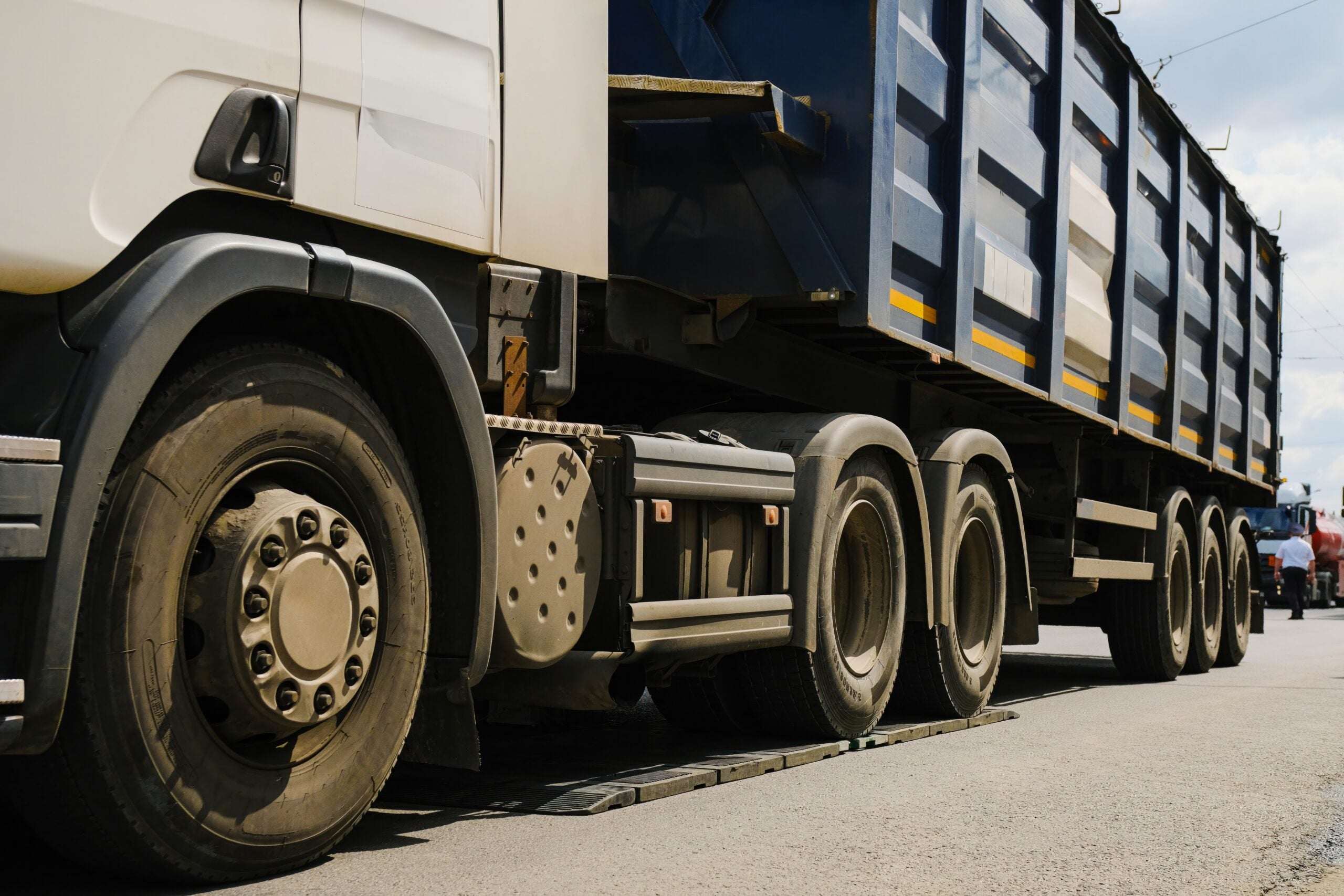
A loaded truck enters a highway weighbridge and is flagged for exceeding its permitted weight limit. The vehicle is stopped, penalties are issued, and the delivery schedule is delayed until excess cargo is removed.
For Indian fleet operators, vehicle weight directly affects compliance, fuel efficiency, payload planning, tyre wear, and legal operating limits. As highway weighbridge enforcement and VAHAN-linked monitoring become more common, understanding weight classifications has become operationally important.
This is where unladen weight, laden weight, and Gross Vehicle Weight (GVW) matter. Unladen weight is the vehicle’s weight without cargo. Laden weight is the actual operating weight with cargo, fuel, driver, and equipment. GVW is the maximum legal operating weight permitted under Indian transport regulations.
This blog explains how these weight classifications work, how GVW limits are regulated in India, and what fleet operators should monitor to remain compliant and avoid overloading penalties.
The three terms explained: Unladen weight, laden weight, and GVW
Fleet dispatch teams regularly work with these three figures during route planning and payload calculations. While closely related, each represents a different stage of vehicle loading and legal compliance in Indian fleet operations.
| Term | US/Global equivalent | Definition | Where to find on the truck |
| Unladen weight | Curb weight | Vehicle weight with fluids but without cargo or passengers | Manufacturer spec sheet; RC book (unladen weight column) |
| Laden weight | Gross weight | Actual total weight once cargo, fuel, driver, and equipment are added | Calculated at weighbridge: unladen + payload + driver + fuel |
| Maximum permissible laden weight | Gross vehicle weight (GVW) | Maximum legal weight approved for the vehicle | RC book; manufacturer chassis plate inside the cabin |
In Indian regulations, GVW is the figure that matters at every weighbridge checkpoint. The formula is simple: Payload capacity = GVW minus unladen weight. Never load beyond that number.

GVW limits for commercial trucks in India in 2026
It is important to know the GVW limit for Indian trucks and the axle load limit before sending out your commercial vehicles. The MoRTH sets maximum allowable GVW limits according to the axles, which are then monitored at the weighbridges and toll plazas on the national highways.
| Truck configuration | Maximum GVW | Common truck types |
| 2-axle truck | 16.2 to 18.5 tonnes | Tata LPT 1613, Eicher Pro 2110, BharatBenz 1617 |
| 3-axle truck | 25 to 28.5 tonnes | Ashok Leyland 2820, Tata Signa 2818, BharatBenz 2823 |
| 4-axle truck | Up to 311 tonnes | Multi-axle rigid haulage trucks |
| 5-axle articulated truck | 37 to 43.5 tonnes | Tractor-trailer combinations |
| Multi-axle trailer | Up to 49-55 tonnes | Container trailers and heavy haulage vehicles |
A truck may remain within its total GVW limit and still violate axle load regulations if cargo weight is distributed unevenly. Fleet operators should verify both overall vehicle weight and axle-wise load distribution before dispatch.
Actual permissible GVW depends on axle configuration, suspension type, and revised MoRTH axle load norms as defined under CMVR axle weight schedules. Enforcement authorities may allow up to 5% tolerance under Section 113(3) of the Motor Vehicles Act. These approved GVW limits are printed in the vehicle RC book, and exceeding them at a weighbridge is treated as overloading under Section 112 of the Motor Vehicles Act, 1988.
Overloading penalties in India: What you risk in 2026
Effective April 2026, MoRTH has introduced a tiered overloading penalty at toll plazas using Weigh-in-Motion (WIM) systems, and violations detected through WIM-enabled enforcement systems can be recorded within VAHAN-linked compliance workflows.
| Overload level | Penalty | Enforcement method |
| Up to 10% overload | No additional toll surcharge | Still treated as overloading under the enforcement rules |
| 10% to 40% overload | 2x base toll rate | Paid via FASTag at the weighbridge |
| Above 40% overload | 4x base toll rate | FASTag payment + VAHAN-linked enforcement record |
Unlike earlier manual enforcement, 2026 WIM systems catch overloaded vehicles automatically at speed. Automated WIM enforcement significantly reduces manual discretion during compliance checks.
Under the MV Act overloading penalty framework, fines begin at ₹20,000 for the first tonne above GVW, plus ₹2,000 for every additional tonne. A truck overloaded by 3 tonnes would therefore face a ₹24,000 penalty (₹20,000 + ₹2,000 + ₹2,000).
Overloading contributed to nearly 12,000 traffic deaths in India during 2023, according to MoRTH road accident data, increasing pressure for stricter enforcement. Additional consequences include vehicle impoundment, forced offloading, permit endorsement, and permit cancellation for repeat violations.
There is no longer a window to negotiate at the checkpoint — WIM systems record the violation before the driver has stopped.

Why this matters for fleet operations: 4 practical implications
Vehicle wear and maintenance costs
Overloading accelerates wear on tyres, suspension, brakes, and chassis — the exact components that predictive maintenance systems monitor. An overloaded truck by even 10% can reduce tyre life by 20–30% and increase brake pad wear significantly, driving up maintenance costs and unplanned downtime.
Fuel efficiency loss
Fuel remains one of the largest variable costs for freight operators in India, particularly on long-distance NH routes. Each extra tonne of load increases fuel consumption by approximately 1.3–1.5 litres per 100km on Indian highways — a direct hit to margins on every overloaded trip.
Legal liability and permit risk
Automated VAHAN overloading record enforcement means repeat violations remain attached to the vehicle’s RC history permanently. Liability under the Motor Vehicles Act extends beyond the driver to the fleet operator, increasing compliance and permit risks for transport companies.
Delayed deliveries and customer SLA impact
Forced offloading at weighbridges can delay shipments by several hours. For logistics companies working under strict customer SLAs, the financial impact of missed delivery windows often exceeds the overloading fine itself.
How to check and stay within GVW: A fleet manager’s checklist
Staying compliant with GVW limits requires a consistent process before every dispatch.
This distinction becomes critical during dispatch decisions.
- Check the RC book: Verify the GVW and unladen weight listed in the RC book before assigning loads to any vehicle.
- Calculate actual payload capacity: Subtract unladen weight from GVW. That number is your hard ceiling for cargo.
- Use certified weighbridges: For heavy freight and long-haul routes, weigh the loaded vehicle before dispatch, not after.
- Account for all onboard weight: Driver weight, fuel load, tarpaulins, ropes, tools, and spare parts all count toward GVW. Factor them in before loading cargo.
- For multi-drop routes: Recalculate weight distribution after each unload to ensure axle limits remain compliant throughout the route, not just at the point of departure.
- Use a connected telematics platform: Monitor vehicle stress indicators in real time to identify overload risks before trucks reach toll plazas or weighbridges.
You may also like: Real-time Vehicle Tracking: How IoT Enables Instant Fleet Visibility
Vehicle weight compliance does not end at dispatch. A truck may leave the loading point within permissible limits and still develop operational risks later due to uneven cargo distribution, route conditions, suspension stress, or repeated overloading patterns across trips.
This is where Intangles adds value beyond basic GPS tracking and weighbridge checks. Instead of relying only on manual verification, Intangles helps fleet operators monitor vehicle behaviour, load-related stress indicators, and operational anomalies continuously across day-to-day fleet operations.
By tracking 250+ vehicle and performance parameters, the platform helps identify patterns associated with overloading, excessive axle stress, abnormal suspension behaviour, and higher mechanical strain before they turn into compliance violations or vehicle damage. Fleet teams gain earlier operational visibility instead of discovering issues only after a weighbridge stop or roadside inspection.
Beyond compliance, this also helps reduce tyre wear, suspension failures, brake stress, fuel inefficiency, and premature component damage commonly associated with overloaded commercial vehicles.
Explore how Intangles’ operations automation helps fleets improve operational visibility, monitor vehicle health, and support safer fleet compliance operations.
KNOW MORE
Frequently Asked Questions
What is the difference between unladen weight and laden weight in India?
Unladen weight is what your truck weighs empty — all fluids topped up, no cargo, no passengers. Laden weight is the total once you’ve loaded cargo, added fuel, the driver has climbed in, and all equipment is on board. These are sometimes called curb weight and gross weight in international contexts, but unladen and laden weight are the terms used in Indian RC books, weighbridge checks, and MoRTH regulations. The gap between the two tells you your payload capacity.
What is GVW in trucks in India?
GVW stands for Gross Vehicle Weight — it’s the maximum weight your truck is allowed to carry by law. This includes everything: the truck itself, whatever you’re hauling, fuel in the tank, the driver, and any gear or equipment. You’ll find this number printed in your RC book, and it’s what gets checked at every weighbridge.
What happens if a truck exceeds GVW in India?
You’re looking at multiple problems. Toll plazas with Weigh-in-Motion will charge you double or even four times the normal rate, depending on how overloaded you are. Then there’s the MV Act penalties — ₹20,000 base fine plus ₹2,000 per extra tonne. They can force you to offload right there, impound the vehicle, and the violation goes straight into the VAHAN system. Do it repeatedly and you risk losing your permits altogether.
What is the overloading fine in India in 2026?
The new MoRTH rules that came into effect in April 2026 work on a sliding scale. If you’re 10% to 40% over the limit, you pay double the toll. Above 40%? That’s four times the toll, paid automatically through FASTag. On top of that, Section 112 of the Motor Vehicles Act imposes ₹20,000 for the first tonne over your GVW, then ₹2,000 for each additional tonne after that.
How do I calculate the payload capacity for my truck?
It’s straightforward: take your GVW and subtract the unladen weight. If your truck’s GVW is 24 tonnes and it weighs 9 tonnes empty, you have 15 tonnes to work with. Remember to factor in your fuel load, driver, tarpaulins, tools, and anything else that’s going on the truck before you start loading cargo.
Does overloading get recorded in VAHAN?
Yes. Under the latest VAHAN overloading enforcement system, violations detected through Weigh-in-Motion checkpoints are automatically recorded against the vehicle registration. Repeat offences can affect permits, compliance history, and enforcement scrutiny for fleet operators.






We’re looking forward to meeting you