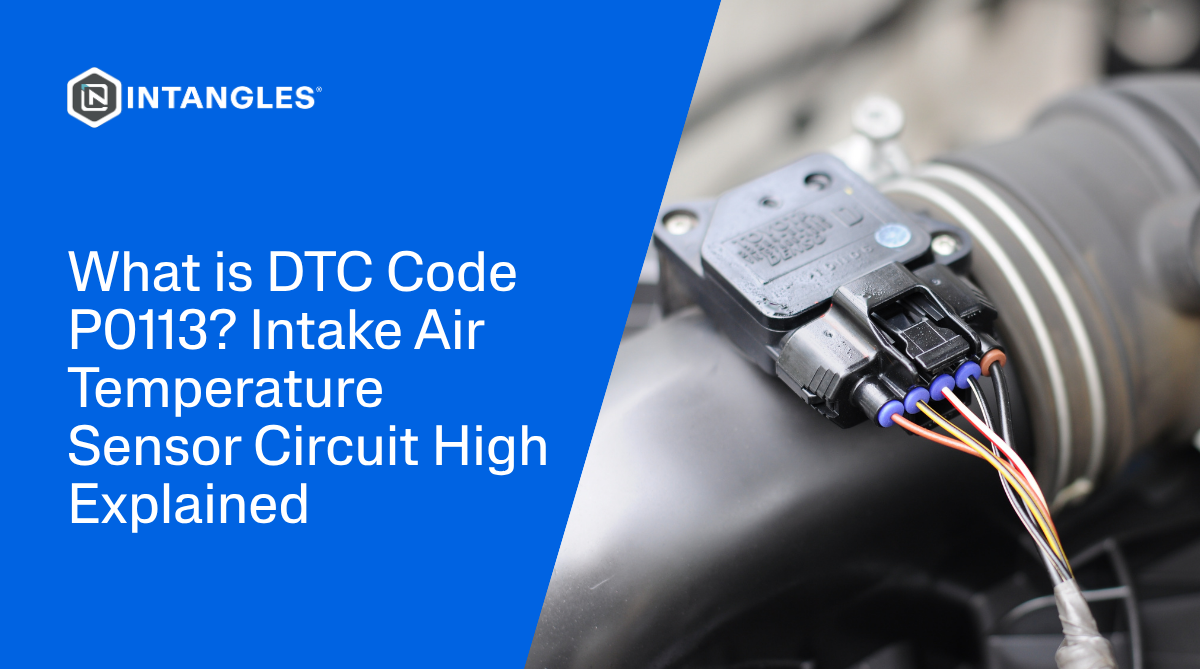
P0113 is the OBD-II code for Intake Air Temperature Sensor 1 Circuit High (Bank 1), set when the voltage returning from the intake air temperature sensor sits higher than the engine computer expects for a sustained period. Unlike a misfire code, it usually produces no noticeable symptom beyond the check engine light, but it means the computer has stopped trusting real air temperature data and switched to a fallback guess instead, one that’s never as accurate as an actual reading.
KEY TAKEAWAYS
- P0113 means the intake air temperature sensor’s returned voltage reads higher than expected, which the computer interprets as a colder-than-real air temperature.
- Most vehicles keep driving normally with this code active, since the computer has a built-in fallback value, though fuel economy takes a small hit.
- An open circuit, whether a broken wire, a corroded or loose connector, or a failed sensor, is the most common cause.
- A short to a reference voltage elsewhere in the harness can also cause the code without any physical break in the wire.
- Because it produces so few symptoms, P0113 tends to sit unaddressed longer than a misfire or catalyst code, even though it can be an early sign of a harness starting to fail.
- Tracking recurring sensor circuit faults across a fleet helps catch a failing harness before it takes out a more critical sensor sharing the same wiring run.
In this guide, we cover what triggers P0113, the most common causes, symptoms to watch for, how to diagnose it, how to fix it, and why it matters more for fleets running multiple vehicles.
What P0113 means
P0113 doesn’t announce itself the way a misfire code does. There’s usually no rough idle, no obvious symptom beyond the check engine light coming on. But that quiet doesn’t mean it’s fine to ignore, because this code means the engine computer has stopped trusting real air temperature data and switched to a fallback guess instead, and that guess is never as accurate as an actual reading.
The intake air temperature sensor’s job is straightforward. It sits somewhere in the intake tract, sometimes built into the mass air flow sensor housing and sometimes mounted separately, and it tells the computer how warm or cold the incoming air is. That number matters because cold air is denser than warm air, so the same volume of cold air needs more fuel mixed in to hit the right air-fuel ratio. The computer uses this reading together with the mass air flow or manifold pressure signal to work out exactly how much fuel to inject at any given moment.
Related article: What is OBD-II? A US Fleet Management Guide for 2026
The sensor is a thermistor, meaning its electrical resistance changes as its temperature changes. The computer sends a small reference voltage through the sensor circuit and reads how much that voltage drops on the way back. P0113 sets when the returned voltage comes back higher than it should for a sustained period, typically above roughly 4.91 volts for 0.5 seconds or more, and because of how this circuit works, a voltage that high corresponds to a temperature reading of roughly -40°F/-40°C, colder than what’s physically plausible for intake air. Bank 1 refers to the sensor tied to the bank containing cylinder number one, which only matters on a V-configuration engine with more than one intake air temperature sensor.
What causes it
An open circuit is the most common cause. That can be a wire in the harness that’s broken somewhere along its length, a connector that’s corroded or sitting loose, or a sensor that’s failed internally and no longer completes the circuit. A short to a reference voltage elsewhere in the harness can push the signal voltage up without any physical break in the wire, which is a harder fault to spot on a quick visual check.
On vehicles where the IAT sensor is built into the mass air flow sensor housing rather than mounted separately, a cracked or physically damaged MAF housing can disrupt the IAT circuit even when the wiring and connector are both intact, which is worth ruling out before condemning the sensor itself. Physical damage near the engine bay is common too, especially on vehicles parked outdoors a lot, where rodents chewing through insulation and vibration wearing through a wire over years are both realistic causes. Less often, the sensor itself has degraded with age and no longer reads accurately even though the wiring around it is intact.
Symptoms to watch for
Because the computer has a built-in fallback for a lost air temperature signal, most vehicles keep driving normally with this code active. Fuel economy takes a small hit since the fallback value is a fixed assumption rather than a live reading that adjusts with the weather. Cold-start behavior can be slightly rougher on genuinely cold mornings. Plenty of drivers report noticing nothing at all, which is exactly why this code tends to sit unaddressed longer than a misfire or catalyst code that produces a symptom you can actually feel.
Related article: What are DTC Codes? A Fleet Guide to Diagnostic Trouble Codes
Diagnosing P0113
Diagnosis starts with a plain visual check before any electrical testing: look at the connector and nearby harness for corrosion, chafed insulation, or a pin that’s not seated all the way. With the connector disconnected, checking the sensor’s resistance at a known ambient temperature against the manufacturer’s resistance chart shows fast whether the sensor is bad, since a reading far outside the expected range at room temperature is a clear fail. If the sensor checks out fine, the next move is probing the circuit back at the computer’s connector with everything reconnected, looking for a wire that’s open somewhere in the run or shorted to a voltage source it shouldn’t be touching.
If other sensor circuits are showing high-voltage codes around the same time, not just the intake air temperature circuit, a failing reference voltage regulator inside the computer is worth ruling out before chasing individual sensors. Many sensors share the same 5-volt reference supply from the computer, so a regulator that’s degraded internally can push several circuits high at once, making the fault look like several unrelated sensor problems when it’s really one shared supply issue. Testing the reference voltage output directly at the computer’s connector against a known-good value confirms whether this is the case.
Intangles keeps a fault code history per vehicle, so a repeat P0113 on the same truck stands out right away instead of getting treated like a fresh problem each time. That distinction changes the entire approach, since a repeat code usually points to a harness issue a first repair didn’t fully catch.
Fixing P0113
A bad sensor gets replaced, and that part is cheap. A wiring fault means finding the specific break or short and repairing or replacing that section of harness, then clearing the code and watching live data through a full temperature cycle to confirm the sensor is tracking ambient conditions correctly before calling the job done. Skipping that confirmation step is how a repair looks finished in the shop and then throws the same code again a week later.
Why it matters for fleets
On its own, P0113 won’t leave a truck stranded anywhere. But a sensor circuit code waved off as low priority is often an early warning that a section of harness is starting to fail, and that damage tends to spread and produce other, more disruptive codes down the line. Left unaddressed long-term, the fixed cold-air assumption the computer falls back on means the engine runs richer than it needs to on every drive, and chronic over-fueling like that can foul spark plugs and add unnecessary strain to the catalytic converter over time, the same kind of wear a rich-running misfire causes. This isn’t a code to treat as purely cosmetic just because nothing feels wrong behind the wheel.
How Intangles supports P0113 diagnosis and harness monitoring
A single P0113 rarely means much on its own, but a harness that’s starting to fail on one truck often shows the same pattern on others running the same route, model, or duty cycle. Intangles keeps fault code history per vehicle and tracks recurring sensor circuit faults across the whole fleet, so a repeat code stands out immediately instead of being treated as a fresh problem each time.
| Capability | How it supports P0113 handling |
| Per-vehicle fault code history | Flags a repeat P0113 on the same truck right away, pointing toward a harness issue a first repair may not have fully caught |
| Fleet-wide sensor circuit fault tracking | Surfaces recurring sensor circuit faults across the fleet, catching a failing harness early instead of after it takes out a more critical sensor sharing the same wiring run |
Explore the platform or get in touch with our team to see how Intangles helps fleets catch a developing harness issue before it spreads to a more critical system.
KNOW MORE
Frequently Asked Questions
What does code P0113 mean?
P0113 means the voltage returning from the intake air temperature sensor is reading higher than the computer expects for a sustained period, which the circuit interprets as a colder-than-actual air temperature, causing the computer to fall back on an assumed value instead of a live reading.
Will P0113 cause any noticeable driving problems?
Usually not. Because the computer has a built-in fallback for a lost air temperature signal, most vehicles keep driving normally, with only a small hit to fuel economy and slightly rougher cold starts on genuinely cold mornings.
What’s the most common cause of P0113?
An open circuit is most common: a broken wire in the harness, a corroded or loose connector, or a sensor that’s failed internally and no longer completes the circuit. Physical damage from rodents or vibration near the engine bay is a frequent contributor.
Can P0113 be caused by something other than a bad sensor?
Yes. A short to a reference voltage elsewhere in the harness can push the signal voltage up without any physical break in the wire, and this kind of fault is harder to catch on a quick visual check than a bad sensor is.
Why does P0113 often go unaddressed for a long time?
Because it produces so few symptoms, drivers frequently report noticing nothing at all, which lets the code sit far longer than a misfire or catalyst code that produces a symptom you can actually feel.
Why does a repeat P0113 matter more than a first occurrence?
A repeat code on the same truck usually points to a harness issue that a first repair didn’t fully catch, rather than a new, unrelated fault, which is why tracking fault code history per vehicle changes how the problem should be approached.




We’re looking forward to meeting you