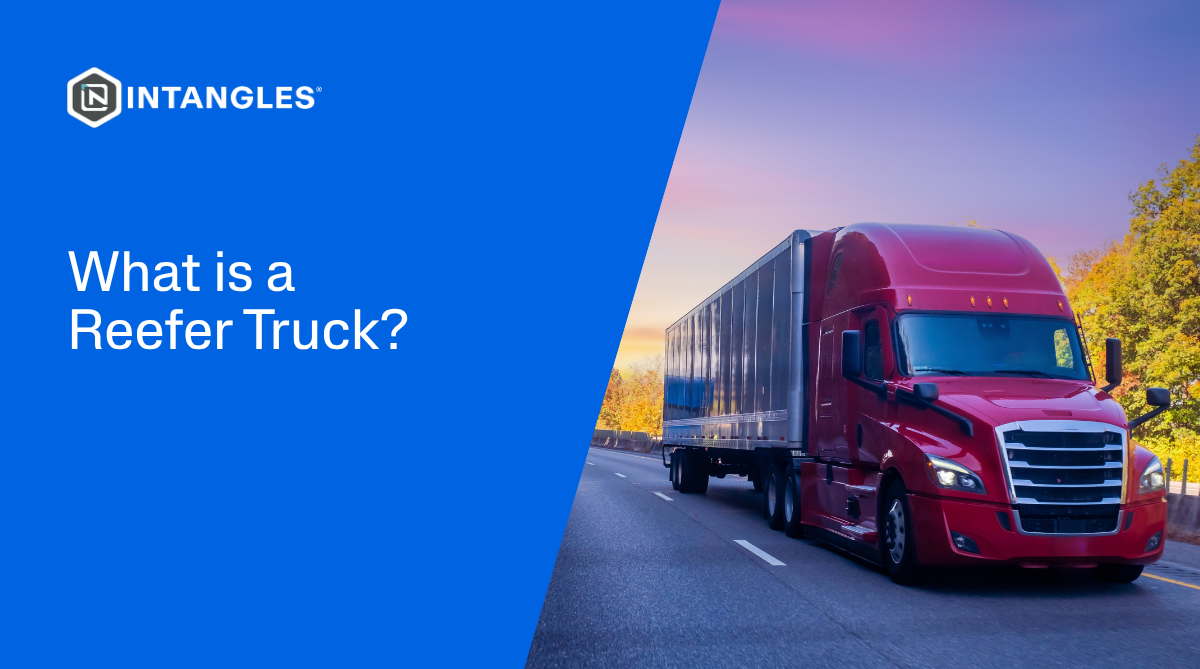
A reefer truck is a refrigerated commercial vehicle equipped with a temperature-controlled unit designed to transport perishable and temperature-sensitive goods. “Reefer” is short for refrigerated, and the term applies to both the truck and the trailer. In US trucking, reefer freight is one of the most consistently in-demand and highest-paying segments of the commercial transportation market.
KEY TAKEAWAYS
- A reefer truck is a refrigerated commercial vehicle used to transport perishable goods, including food, pharmaceuticals, and other temperature-sensitive cargo.
- The refrigeration unit (TRU) runs independently of the truck engine, maintaining precise temperature control regardless of weather or transit duration.
- Reefer loads typically command 15 to 30% higher freight rates than dry van freight due to specialized equipment and stricter compliance requirements.
- Temperature excursions, equipment failures, and driver error are the leading causes of reefer cargo loss in US operations.
- FSMA regulations require documented temperature monitoring for food-grade reefer shipments. Non-compliance risks cargo rejection, fines, and loss of shipper relationships.
- Predictive vehicle health monitoring is increasingly essential for managing reefer fleet uptime and cargo integrity.
In this guide, we cover how reefer trucks work, common cargo types, trailer sizes, cold chain logistics, key compliance requirements, the main causes of reefer failures, and how fleet technology helps US operators reduce cargo loss and downtime in 2026.
How does a reefer truck work?
A reefer truck uses a transport refrigeration unit (TRU) mounted at the front of the trailer to maintain a consistent internal temperature throughout the journey. The TRU operates independently of the cab engine, running on its own small diesel motor while in transit and switching to electric standby when the trailer is parked and connected to shore power.
Key components of a reefer system:
- Transport Refrigeration Unit (TRU): The diesel or electric-powered unit that drives the entire cooling system.
- Evaporator and condenser coils: Regulate heat absorption and release to maintain the target temperature.
- Insulated trailer walls, ceiling, and floor: Minimize heat transfer from the outside environment.
- Air chutes and floor channels: Distribute cold air evenly throughout the cargo area.
- Temperature sensors: Track internal temperature in real time, helping fleet operators maintain cargo integrity throughout the journey.
The current refrigeration system operates at temperatures between -20°F (frozen cargo) and 65°F (fresh cargo), with the ability to regulate within 1-2 degrees Fahrenheit of the set point. Since the TRU uses an independent diesel engine throughout the process of transportation, there is an additional cost of fuel for the refrigeration process.
What do reefer trucks carry?
Reefer trucks serve any industry where cargo must stay within a specific temperature range during transport. The most common categories in US reefer operations:
- Fresh produce: Fruits and vegetables moving from distribution centers to grocery retailers and food service operators.
- Meat and seafood: Requires consistent temperatures to meet USDA and FDA food safety standards.
- Dairy and eggs: Temperature-sensitive from processing through final delivery.
- Frozen foods: Require sustained sub-zero temperatures across the entire supply chain.
- Pharmaceuticals and biologics: Vaccines, medications, and clinical samples governed by FDA cold chain guidelines.
- Floral and specialty chemicals: Fresh flowers, plants, and temperature-sensitive compounds.
Reefer temperature ranges by cargo type
| Cargo type | Typical temperature range |
| Frozen foods | -20°F to 0°F |
| Meat and seafood | 28°F to 32°F |
| Dairy and eggs | 34°F to 38°F |
| Fresh produce | 32°F to 55°F |
| Pharmaceuticals and biologics | Commonly 36°F to 46°F |
| Floral | 33°F to 35°F |
Reefer trailer sizes and configurations
| Trailer length | Common use |
| 28 feet | Regional distribution, LTL reefer freight, pup trailers |
| 48 feet | Multi-stop distribution routes, medium-haul freight |
| 53 feet | Long-haul, full truckload, industry standard for most lanes |
The 53-foot trailer is the industry standard for long-haul reefer freight. Reefer trailers carry slightly less weight than comparable dry vans, typically 42,000 to 44,000 lbs, due to the added weight of the TRU and insulation. Multi-temperature trailers with partition walls allow carriers to run different temperature zones in a single trailer, enabling mixed loads of frozen and fresh cargo on the same run.
What is cold chain logistics?
The cold chain logistics involve all measures taken to maintain the temperature of products throughout their journey, starting right from the origin, through transport, until it reaches the point of delivery. Modern cold chain operations increasingly depend on connected vehicle technologies that provide continuous visibility into asset location, operational status, and transport conditions.
In the US, cold chain logistics serves two primary markets. Food cold chains move fresh, chilled, and frozen products from farms and processing facilities to retailers and food service operators, governed by the FDA’s FSMA Sanitary Transportation rule. Pharmaceutical cold chains operate under stricter tolerances, with vaccines and biologics requiring unbroken temperature integrity from manufacturer to patient under FDA Good Distribution Practice requirements.
Reefer compliance requirement for US fleets
FSMA sanitary transportation rule
According to the FDA’s FSMA Sanitary Transportation of Human and Animal Food regulation, when shipping food, the carriers are supposed to regulate temperatures appropriately, maintain clean trailers, and record temperatures during transport. The shipper or receiver can insist on temperature records for the entire journey before accepting delivery. Non-compliance can result in cargo rejection and loss of shipper contracts.
FSMA inspection and documentation requirements
CMV and reefer trucks should be subjected to FMCSA inspection according to 49 CFR Part 396 annually, as well as conducting pre- and post-trip DVIR and complying with HOS requirements. As far as pre-trip inspection of reefer trucks is concerned, in addition to the normal inspection of vehicles, there would be a requirement to inspect the TRU, temperature sensors, and door seals as well. Real-time temperature monitoring equipment has been made compulsory by most pharmaceutical companies and food shippers, and this trend will continue till 2026 for grocery and food companies as well.
Common causes of reefer failures and cargo loss
Temperature excursions
A temperature excursion occurs when cargo moves outside its required range during transit. Common causes include degraded door seals, TRU malfunctions, improper pre-cooling before loading, overloaded trailers restricting airflow, and drivers leaving doors open during multi-stop deliveries.
TRU equipment failures and maintenance
Of all the systems of the reefer truck, the TRU is the one that requires the most maintenance attention. Leaks of refrigerant and other fluids, belt failure, hose failure, clogged condensers, and faulty sensors represent typical sources of malfunction. Unlike the case of engine failure, which can be easily identified within a very short time frame, TRU problems might develop very slowly and only start showing up after some hours due to temperature changes. Regular maintenance operations include an inspection of the compressor, belts, hoses, condenser coils, and sensors.
Loading and driver errors
Blocking air ducts with improperly loaded cargo, carrying pre-heated cargo on board, and forgetting to check TRU temperatures before leaving for a trip have been identified as common causes of cargo losses despite a working TRU system. Both training and live monitoring help prevent such problems.
Reefer fleet management in 2026
Managing a reefer fleet requires oversight of both the truck and the TRU as connected but distinct operational systems. Cab and TRU engine hours, fuel consumption, and fault codes need to be tracked together. A cab breakdown leaves cargo stranded. A TRU that fails silently while the cab keeps moving puts cargo at risk without any driver alert. Fleets tracking only cab fuel consumption are underestimating true operating costs on reefer lanes, since the TRU burns diesel independently throughout every run.
According to the USDA, food loss and waste across the US supply chain amounts to approximately 30 to 40% of the food supply. This figure spans the entire farm-to-consumer chain, and transportation temperature failures are one of several factors that can contribute to spoilage within that broader total. Reducing avoidable temperature excursions remains both an operational and a supply chain efficiency priority for reefer fleets.
How Intangles supports reefer fleet operations
Intangles is a digital twin company serving the transportation and logistics industry across 18 countries, with more than 500,000 vehicles on the platform and a predictive AI accuracy rate of 96%. The InGenious device connects directly to the vehicle OBD port, with no modifications or additional sensors required, and feeds real-time ECU data into the InRoute platform. Across the fleets it serves, Intangles has helped reduce powertrain breakdown events by 75%.
| Capability | How it helps fleet managers |
| Vehicle health monitoring | Tracks engine, aftertreatment, battery, alternator, and fuel systems continuously. Surface fault codes and predictive alerts before cab issues cause breakdowns on reefer lanes. |
| Fuel management | Tracks cab fuel consumption, idle-attributed loss, and cost-per-mile, giving fleet managers accurate operating cost data across reefer routes. |
| Predictive maintenance scheduling | Triggers maintenance from actual system health signals rather than fixed intervals, reducing unplanned downtime on temperature-sensitive freight lanes. |
Intangles connects through the OBD port and is compatible with 40+ OEM brands in the US market, including Volvo, Kenworth, Peterbilt, Freightliner, Mack, International, Western Star, Scania, and Mercedes-Benz.
Explore the platform or get in touch with our team to find out more about how Intangles assists reefer fleets in tracking vehicle health, operational losses, and fuel economy.
KNOW MORE
Frequently Asked Questions
What does reefer mean in trucking?
Reefer is the abbreviated form of “refrigerated.” The term is used to mean either the refrigerated trailer itself or the whole truck pulling it. If one speaks of someone “running reefer,” he means the person is transporting temperature-sensitive goods.
What is a TRU?
A TRU, or Transport Refrigeration Unit, is the independent diesel or electric-powered cooling system mounted at the front of a reefer trailer. It operates separately from the cab engine and maintains the cargo area at the required temperature throughout transit. The TRU is the most maintenance-intensive component of a reefer operation.
How does a reefer unit stay cold when the truck is parked?
The TRU works with its own little diesel generator, which is separate from the cab. With the trailer stopped and plugged into external electricity, the TRU can go to electric standby and keep temperatures without having to use diesel fuel.
What temperature can a reefer truck maintain?
Modern reefer systems can cool down goods at temperatures ranging between -20°F for frozen cargo to 65°F for fresh produce or flowers, providing an accuracy of control within a degree or two of the required temperature setting.
What regulations apply to reefer trucks in the US?
Reefer trucks are covered by the standard FMCSA CMV regulations for things like Hours of Service and ELD rules, CDLs, and annual inspections. Reefer trucking that is food grade is covered by the FDA’s Sanitary Transportation regulation under the FSMA. If you are shipping pharmaceutical products, then you need to comply with the Good Distribution Practice regulations of the FDA.
Why do reefer loads pay more than dry van?
The cost of carrying reefers is usually between 15 and 30 percent higher than carrying dry vans, as reefer transport needs special handling, extra compliance, more training for drivers, and higher risks. An off-tolerance temperature reading could lead to the whole shipment being rejected.




We’re looking forward to meeting you