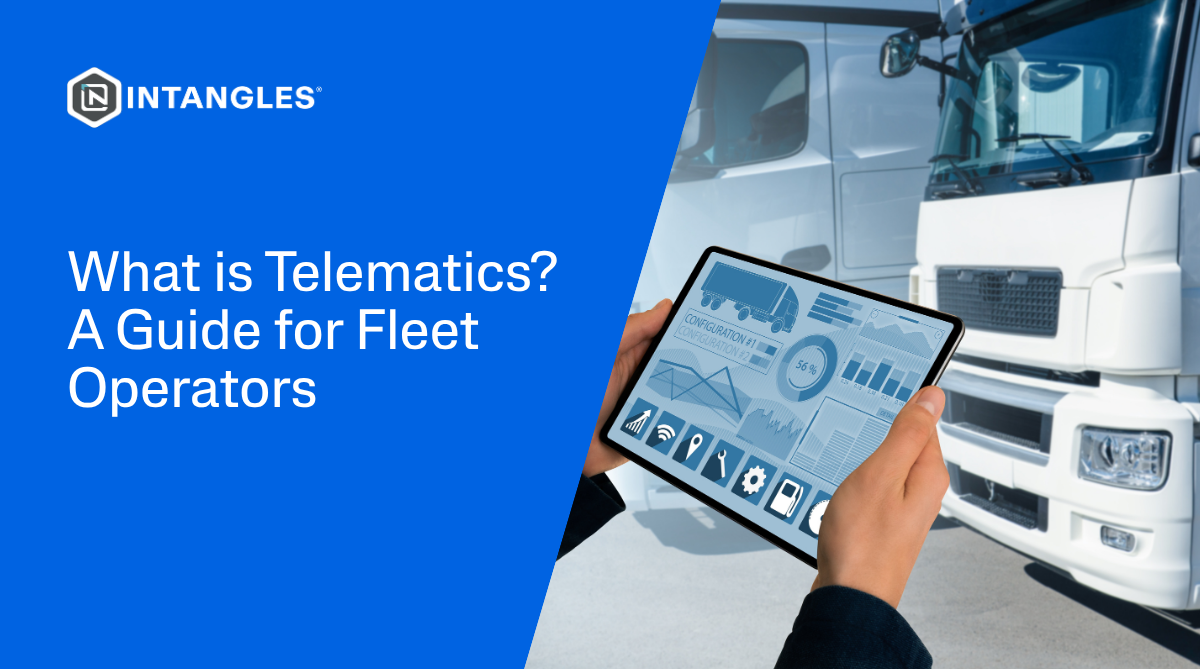
Telematics is a connected vehicle technology that combines GPS tracking, onboard diagnostics, IoT sensors, driver behavior monitoring, and cloud analytics to help fleet operators monitor, manage, and optimize their operations in real time.
KEY TAKEAWAYS
- Telematics goes far beyond GPS — it delivers connected operational intelligence across vehicle health, fuel efficiency, driver safety, maintenance, and compliance.
- Modern telematics systems collect data from a vehicle’s ECU, GPS, and onboard sensors, transmit it through cellular networks, and process it on cloud platforms to generate real-time operational insights.
- For U.S. fleet operators, telematics supports FMCSA compliance through automated Hours of Service (HOS) tracking via integrated ELDs and digital DVIR workflows.
- Predictive maintenance powered by telematics data reduces unplanned downtime and extends vehicle life — critical for logistics, trucking, construction, and other asset-heavy industries.
- AI-driven fleet intelligence platforms like Intangles are helping fleets achieve up to a 75% reduction in powertrain breakdowns, a 10-30% improvement in fleet uptime, and a 2-10% improvement in fuel efficiency.
American fleet operators are under more pressure than ever — rising fuel costs, tighter FMCSA regulations, driver shortages, and customer demand for real-time delivery visibility are squeezing margins across every segment of the industry. Managing these challenges manually across dozens or hundreds of vehicles is no longer feasible.
In this guide, we break down what telematics is, the core problems it solves, how it works, its key components, and why connected fleet intelligence has become foundational to modern transportation operations.
What problems does telematics solve?
Before evaluating any telematics solution, it helps to understand exactly which operational problems the technology is designed to address. For U.S. fleet operators, the most costly and recurring challenges are:
- Excessive fuel costs: From idling, aggressive driving, inefficient routing, and unauthorized vehicle use.
- Unplanned roadside breakdowns: Caused by missed maintenance signals and unmonitored vehicle health degradation.
- FMCSA compliance overhead: Around HOS logging, vehicle inspections, and audit documentation.
- Poor fleet visibility: That creates gaps between dispatch, maintenance, and field operations.
- Driver safety risk: From speeding, hard braking, fatigue, and distracted driving that insurance carriers and regulators take seriously.
- Dispatch coordination delays: From disconnected tools and outdated information.
- Manual maintenance scheduling: That reacts to failures instead of preventing them.
- Fuel theft and fluid misuse: That go undetected without real-time consumption monitoring.
Telematics addresses each of these problems by creating a continuous, connected data layer across the entire fleet, converting vehicle behavior into operational intelligence that managers can act on in real-time.
How does telematics work?
A telematics system works by continuously collecting vehicle data, transmitting it through connected networks, processing it on cloud platforms, and converting it into operational insights that fleet managers can act on immediately.
The flow follows a connected sequence:
Vehicle + ECU + Sensors → Cellular Connectivity → Cloud Analytics Platform → Fleet Operations Dashboard
Commercial trucks operating in the modern age provide a lot of data generated by onboard computer systems, GPS trackers, engine control units (ECUs), and IoT devices. All of these tools track the vehicle’s performance in terms of its engine performance, fuel usage, speed, braking, idling time, and battery management.
Once collected, this data is transmitted through cellular networks into cloud-based platforms where it is processed and analyzed. Advanced platforms like Intangles go beyond displaying raw data — they apply AI algorithms to detect inefficiency patterns, flag maintenance risks, identify unsafe driving behaviors, and issue proactive alerts before operational problems escalate.
The result is delivered to fleet managers through real-time dashboards, automated alerts, and live monitoring tools. A well-designed telematics platform can warn operators about a rising engine temperature before a roadside breakdown, detect DPF loading patterns before a derating even disrupts a run, or flag a driver’s fatigue risk before an incident occurs.
The real value of telematics is not just knowing where your vehicles are. It is shifting your fleet from reactive firefighting to predictive data-driven operations.
Core components of a telematics system
Modern telematics systems rely on multiple connected technologies working together. Understanding each component helps fleet operators evaluate what they need and why it matters.
GPS tracking
Vehicle locations can be tracked in real time using GPS tracking, which gives information regarding the location and movement of vehicles. This helps fleet managers in better dispatching, compliance checking, and estimation of ETAs of deliveries.
That said, GPS tracking alone only tells you where a vehicle is. Telematics goes further by combining location data with diagnostics, fuel analytics, and driver behavior monitoring. GPS creates visibility; telematics creates operational intelligence.
Vehicle diagnostics
Telematics systems pull data directly from a vehicle’s OBD port or ECU to monitor engine health, fault codes, coolant levels, battery condition, DPF status, fuel rail pressure, oil pressure, and other critical components in real-time.
In conventional fleets, maintenance was always performed after a problem had arisen. With the advancement in technology, modern fleets utilize telematics for preventive maintenance and even predictive maintenance. This allows fleet managers to identify potential problems and plan preventive maintenance measures to avoid any unnecessary downtime and expensive mechanical failures. The importance of this change in the case of American fleets cannot be overstated.
Driver behavior monitoring
A driver’s mode of driving can have a great impact on fuel efficiency, brake usage, tire wear, risk of accidents, insurance fees, and total costs associated with fleet operations. Telematics technology evaluates the driving patterns of an entire fleet of vehicles to detect risky behaviors that exist individually as well as those existing among the fleet.
Driving behaviors such as speeding, harsh braking, rapid acceleration, idle driving, sharp turns, constant driving, and driver fatigue are some examples of the behaviors monitored by telematics. Intangles monitors over twenty exceptions of driver behaviors and includes methods such as driver scoring, benchmarks, and coaching as part of its system.
Fuel monitoring
Fuel is one of the largest line items in any U.S. fleet’s operating budget, especially in long-haul trucking, construction, and heavy-duty commercial operations. Telematics enables continuous fuel monitoring by analyzing idle time, route efficiency, engine load, driver behavior, and vehicle utilization patterns.
Telematics solutions that are technologically advanced can even identify when fuel has been stolen, the car being used without authorization, adulteration of fuel, and any abnormal fuel consumption habits – all without needing new sensors or altering the fuel tanks in any way. Small gains in fuel efficiency add up quickly to real savings.
Video telematics
AI-powered dashcam systems integrated with telematics data have become standard practice in U.S. commercial fleet management. Unlike older cameras that only recorded footage passively, video telematics actively detects distracted driving, following-too-close events, lane departure, drowsiness, pedestrian collision risk, and potential incidents, alerting drivers in real-time.
Video telematics also protects fleets from false liability claims. When an incident occurs, timestamped video evidence synced with vehicle data provides an objective account that manual reporting cannot match.
Cloud analytics platforms
The cloud analytics platform is the operational hub of a telematics ecosystem. It is where raw vehicle data becomes actionable intelligence, displayed through dashboards and reports that give operations teams, maintenance managers, and dispatchers a unified view of the entire fleet.
The increase in data generated by fleets makes it imperative for organizations to have a system that can handle diagnostic analysis, scheduling of maintenance activities, driver management, and fuel analysis, among other activities, in one place.
GPS tracking vs. telematics: What is the difference?
This is one of the common questions fleet operators ask when evaluating technology options.
| Parameters | GPS tracking | Telematics |
| Primary function | Vehicle location | Full operational intelligence |
| Data collected | Position, route history | Location plus diagnostics, fuel, driver behavior, and maintenance |
| Operational value | Basic visibility | Predictive and diagnostic insights |
| System type | Standalone tracker | Connected fleet ecosystem |
| Compliance support | Limited | ELD, HOS, DVIR integration |
GPS tracking answers one question: Where is the vehicle?
Telematics answers the questions that actually move the needle on fleet performance: How is the vehicle performing? Is it at risk of breaking down? Is the driver operating safely and efficiently? Is maintenance overdue? Is this fleet in compliance with FMCSA requirements?
For U.S. fleets operating in a regulated, cost-sensitive environment, the difference is significant.
Types of telematics systems
Telematics has evolved to serve different operational environments and asset types.
Fleet telematics
The most popularly used classification involves commercial vehicle fleets across logistics, transportation, construction, and field services. Fleet telematics combines functions like dispatching, maintenance, safety, fuel tracking, and compliance management into one system.
OEM telematics
It refers to connected systems built directly into vehicles by manufacturers. These platforms support remote diagnostics, over-the-air updates, and connected vehicle health monitoring, and increasingly integrate with third-party fleet platforms.
Asset telematics
It goes beyond simply tracking vehicle movements to include trailers, cold storage units, construction equipment, and other non-motorized industrial equipment. Companies utilize this technology to keep track of usage, maintain conditions, and manage assets distributed throughout job sites or customer premises.
EV telematics
This is an evolving category with emphasis on electric fleet management, which tracks the health of batteries, charging behaviors, heat generation, energy usage, and range predictions. With the increasing adoption of electric vehicles among American fleets, connected EV analytics has become increasingly important to manage the total cost of ownership.
Key benefits of telematics for U.S. fleet operators
1. Reduced fuel costs
Waste of fuel in commercial fleets may result from unnecessary idling of vehicles, poor routing strategies, aggressive driving practices, and unauthorized usage of company-owned vehicles. By monitoring fuel usage in relation to other factors such as driver activity, efficient routes, and engine function, telematics highlights wastage in all of these areas.
2. Predictive maintenance and reduced downtime
Telematics systems provide constant monitoring of the vehicle state, identifying any faults in the early stages of development before they lead to a vehicle breakdown. In this way, maintenance becomes proactive, which will save time and extend the lifespan of the vehicle.
3. Improved driver safety
Telematics gives a constant view of dangerous driver behavior, including speeding, abrupt braking, rapid acceleration, and fatigue. When combined with video telematics using artificial intelligence, fleet managers can spot trends that pose hazards to their business and make changes before any problems occur.
4. FMCSA compliance and reporting
Telematics systems that are combined with ELDs can help drivers to automatically monitor HOS data and make DVIR forms in a digital manner, thus complying with all FMCSA regulations without doing too much paperwork manually.
5. Better fleet visibility and coordination
Telematics creates a centralized, real-time view of vehicle location, route progress, maintenance status, and driver availability. Shared visibility across dispatch, maintenance, and operations teams improves coordination, reduces delays, and enables faster decision-making.
6. Improved customer experience
Real-time tracking and accurate ETA visibility help fleets respond faster to delays and provide more reliable delivery updates. This improves customer communication, service reliability, and overall operational transparency.
How much can telematics save?
Fleet operators evaluating telematics often want to understand the financial case before committing. While actual results vary by fleet size, industry, and operational maturity, published benchmarks provide a useful starting point.
AI-driven telematics platforms have demonstrated the following outcomes across commercial fleet deployments:
| Metric | Typical improvement range |
| Fuel efficiency | 2% to 10% improvement |
| Fleet uptime | 10% to 30% increase |
| Powertrain breakdown events | Up to 75% reduction |
| Driving behavior improvement | 20% to 30% |
| Warranty and maintenance costs | 10% to 15% reduction |
| Predictive AI accuracy | Up to 96% |
This can add up very fast in terms of financials. For example, a company with a fleet of 100 vehicles using up 50,000 gallons of gasoline per month can save money annually with just a 7% increase in efficiency. When combined with savings on breakdown towing, emergency repairs, and lower premiums because of safe driving, the return on investment makes itself quite clear.
Industries using telematics across the US
Telematics delivers value wherever vehicle or equipment performance directly affects operational outcomes.
| Industry | Primary telematics use case |
| Logistics and trucking | HOS compliance, route optimization, fuel management, predictive maintenance |
| Construction | Equipment tracking, idle time monitoring, fuel accountability, maintenance scheduling |
| Mining, oil, and gas | Remote asset monitoring, safety management, breakdown prevention |
| Cold chain and food distribution | Temperature monitoring, route visibility, delivery window compliance |
| Public transit and passenger transport | Schedule adherence, driver behavior management, service disruption response |
| Field services and utilities | Dispatch efficiency, technician tracking, asset utilization |
| Agriculture | Seasonal equipment monitoring, fuel management, condition-based maintenance |
In every sector, the common driver is the same: reducing downtime, managing costs, and making faster, better-informed operational decisions.
Challenges in implementing telematics
Understanding common implementation challenges helps fleet operators plan for successful adoption.
| Challenge | Operational Impact |
| High data volumes | Connected vehicles generate continuous data streams. Without intelligent analytics, identifying meaningful patterns and prioritizing actions becomes difficult. |
| Fragmented systems | Many fleets operate separate platforms for dispatch, maintenance, ELD compliance, and tracking. Fragmentation slows coordination and reduces the value of telematics data. |
| Driver adoption | Telematics implementation requires clear communication about how data is collected and used. Transparency and driver engagement programs are essential to minimize resistance. |
| Mixed fleet compatibility | Vehicles from different OEMs may use different hardware, software protocols, and data structures, creating inconsistencies that complicate fleet-wide analytics. |
| Limited actionability | Many organizations collect telematics data successfully but fail to build workflows that convert insights into faster maintenance response, coaching, or operational improvements. |
The most successful telematics implementations treat the technology not as a surveillance tool but as an operational intelligence system — one that helps everyone from the driver to the fleet director do their job more effectively.
The future of telematics
Telematics is evolving from basic vehicle tracking into predictive fleet intelligence. Modern platforms are increasingly designed not just to report operational events, but to anticipate failures, identify inefficiencies early, and help fleets act before disruptions occur.
Several trends are accelerating this shift:
- AI-powered predictive maintenance that identifies fault progression before roadside failures
- Video telematics with real-time driver coaching and collision-risk detection
- EV fleet analytics focused on battery health, charging optimization, and thermal management
- Deeper integration with ERP, dispatch, maintenance, and warehouse systems to create unified operational workflows
As fleet operations become more data-intensive, telematics is becoming foundational operational infrastructure rather than a standalone tracking tool.
How Intangles approaches telematics
Intangles approaches telematics differently from conventional tracking platforms. Rather than simply displaying vehicle data, Intangles uses Digital Twin Technology and machine learning to model how each vehicle should be performing under its specific operating conditions, and then continuously compares that expectation against actual behavior to surface deviations before they become failures.
The InGenious device connects directly to a vehicle’s OBD port without requiring external modifications or additional sensors. By reading from the Electronic Control Unit (ECU), it captures engine, aftertreatment, brake management, battery and alternator, and air intake system data simultaneously, giving the platform a complete, context-rich picture of vehicle health at all times.
That data feeds into InRoute, Intangles’ all-in-one fleet intelligence platform, which transforms raw ECU and sensor data into prioritized operational insights across the following capabilities:
| Capability | What it does |
| Vehicle health monitoring | Detects engine, DPF, DEF, battery, oil pressure, and fuel rail anomalies before DTCs are triggered. Includes guided repair recommendations and root cause analysis. |
| Operational loss quantification | Maps vehicle health degradation and behavior inefficiencies to direct financial loss by event, time window, and distance. |
| Fuel management | Tracks consumption, idle-attributed loss, and fuel theft using OEM sensors and machine learning. No additional hardware required. Calculates cost per mile. |
| DriveIQ driver scorecard | Scores drivers across 20+ behavior exceptions, normalized per distance and time. Supports coaching and incentive programs. |
| Video telematics | AI dashcams with forward collision, lane departure, fatigue, and pedestrian detection. Up to 30 hours of on-demand video. |
| Operations automation | Configurable alerts for idling, speeding, fuel theft, and low DEF. Automated maintenance scheduling and fleet exception reporting. |
| Trip management | Real-time hub-to-hub tracking with route assignment, deviation recording, and delay monitoring. |
Intangles currently generates over 100,000 critical alerts per month, has helped avert more than 2 million breakdown events per month, detected over 84,500 gallons of fuel theft per month, and prevented approximately 1,000 tons of CO2 emissions per month across its platform.
For U.S. fleet operators where uptime directly affects profitability and customer satisfaction, Intangles enables the shift from reactive fleet management to predictive, financially accountable operations.
KNOW MORE
Frequently Asked Questions
What is telematics in simple terms?
Telematics is a technology system that combines GPS tracking, vehicle diagnostics, sensors, and cloud analytics to help businesses monitor and manage fleet operations in real-time. It turns raw vehicle data into operational insights that help fleet managers reduce costs, improve safety, and increase uptime.
What is the difference between GPS tracking and telematics?
The GPS tracks the whereabouts of the vehicle. Telematics offers detailed intelligence regarding its operations, such as the status of the vehicle, the usage of fuel, driving patterns, maintenance information, and compliance reports.
How does telematics improve fleet efficiency?
Telematics is efficient because it can detect fuel wastage, streamline routing, minimize unnecessary idling time, facilitate predictive maintenance, improve dispatch communication, and provide information that helps in training drivers in safe and economical driving practices.
Can telematics help prevent vehicle breakdowns?
Yes. The modern telematic system monitors the health of the vehicle constantly, which means that if any warnings arise due to issues like fault codes, overheating engine, and DPF loading, it will be identified before the vehicle breaks down on the roadside.
Does telematics support FMCSA compliance?
Yes. Telematics platforms integrated with certified ELDs automate Hours of Service tracking, support DVIR workflows, and generate the audit-ready documentation that FMCSA compliance requires. This reduces administrative burden and lowers the risk of violations.
Is telematics important for electric vehicle fleets?
Yes. EV telematics helps fleet managers monitor battery health, charging cycles, energy consumption, thermal performance, and vehicle range, enabling efficient EV fleet management and supporting total cost of ownership analysis as commercial EV adoption grows.




We’re looking forward to meeting you