
KEY TAKEAWAYS
An anti-lock braking system (ABS) prevents wheels from locking during sudden braking, helping drivers maintain control under high-risk conditions. For a fleet manager, this directly impacts accident risk, inspection outcomes, and vehicle uptime. Understanding what ABS does and how it works helps identify braking issues early and support safer operations. In this blog, we break down what ABS is, how ABS works, and what it means for fleet operations.
A truck under hard braking can either lose control as the wheels lock and skid, or maintain stability through controlled braking. That difference is determined by ABS.
Most fleets rely on ABS every day, but its role is often limited to a basic safety assumption rather than a clear understanding of how it affects control, stability, and operational risk.
In real-world fleet conditions, this becomes more important because braking is rarely uniform. Vehicle load, road surface, speed, and driver behavior all influence how a vehicle responds in emergency situations, and ABS is designed to manage those variations in real time.
This guide explains what ABS is, how it works, and why it matters in real fleet operations.
What is ABS (anti-lock braking system)?
ABS, or Anti-lock Braking System, is a technology that enables controlled braking under pressure. It prevents wheels from locking by automatically adjusting brake force when slip is detected.
At its core, ABS enables controlled braking under pressure. The anti-lock braking system refers to a technology that prevents wheels from locking by automatically adjusting brake force when slip is detected.
In real driving conditions, braking does not always happen smoothly. Sudden brake application, wet roads, and heavy loads can cause wheels to lock instantly. ABS prevents this by ensuring the wheels continue rotating in short, controlled intervals instead of locking completely.
The importance of this system is reflected in its widespread adoption across the automotive industry. By the end of 2025, the global ABS market reached a valuation of $62.82 billion, highlighting its role as a standard safety feature in modern vehicles.
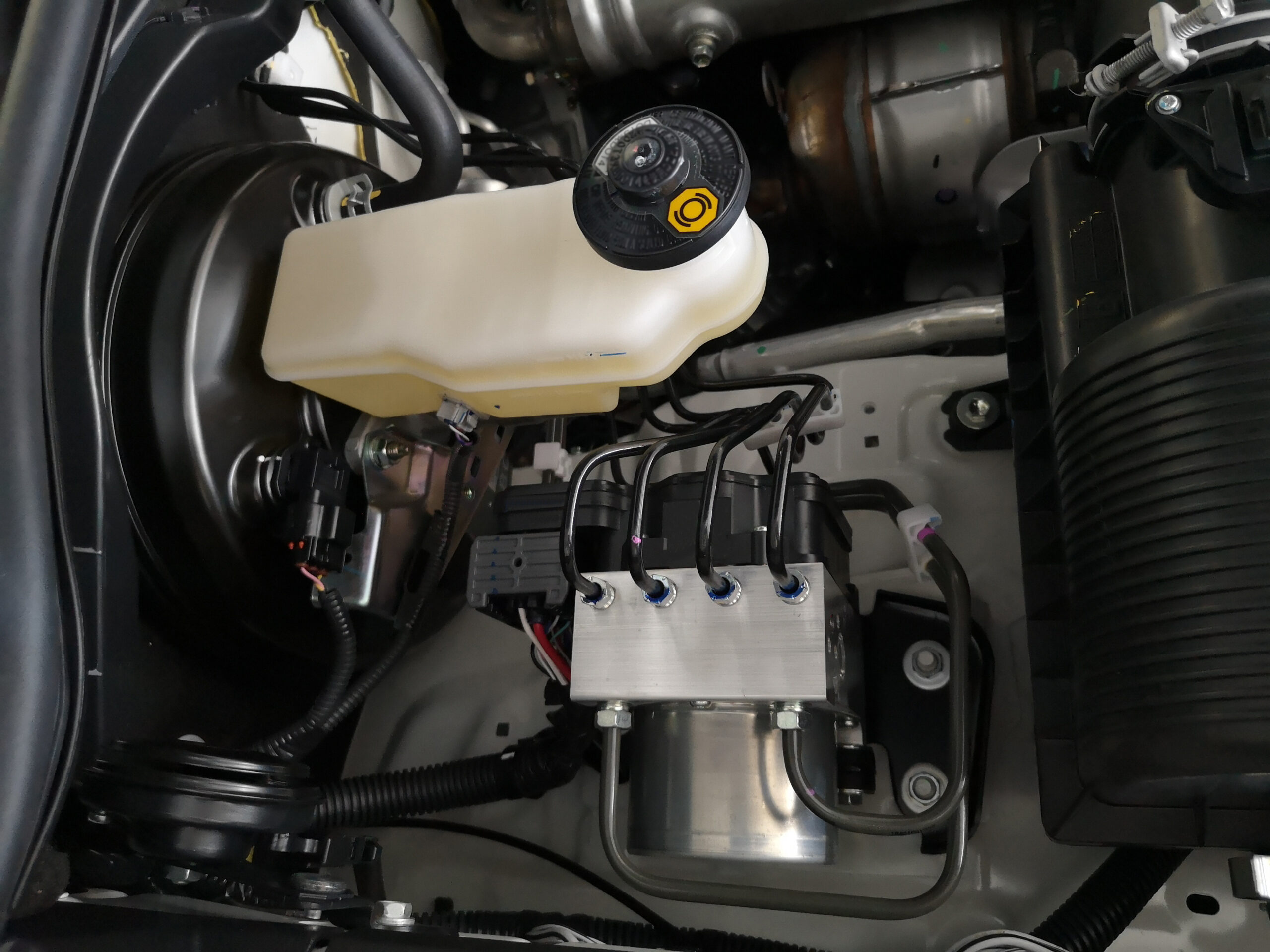
It is an electronically controlled system that works with conventional brakes using sensors and a control unit to regulate braking pressure in real time.
A brief history of ABS in vehicles
ABS did not originate in road vehicles; its application came later, after it had been used initially in aircraft for the prevention of wheel locking on landing. With advances in braking technology, ABS found its way to passenger cars in the latter half of the 20th century and then into commercial trucks.
Safety considerations led to this change. With the identification of potential dangers associated with wheel locking and the possibility of losing control, the need for mandatory ABS installation in commercial trucks followed. Currently, it is one of the basic components of safety equipment in commercial vehicles worldwide.
What does ABS do? How it protects drivers and fleets
Understanding what ABS does is critical for fleet managers evaluating safety systems. The ABS function goes beyond braking; it directly impacts control, accident risk, and vehicle stability.
Prevents wheel lockup during hard braking
Wheel lock during braking leads to skidding. ABS continuously adjusts brake pressure to prevent this and maintain traction.
Maintains steering control in emergency stops
When wheels lock, steering control is lost. ABS ensures wheels keep rotating so the driver can steer during emergency braking.
Reduces stopping distance on most surfaces
ABS improves braking performance on wet and dry roads. On loose surfaces like gravel, stopping distance may vary, but control remains better than locked wheels.
How does ABS work?
ABS works by continuously monitoring and adjusting braking force during deceleration.
It is built on three core components:
- Wheel speed sensors that track wheel rotation
- An electronic control unit (ECU) that processes data
- Hydraulic valves that adjust brake pressure
During braking, sensors send real-time wheel speed data to the ECU. If a wheel slows too quickly and risks locking, the ECU adjusts brake pressure instantly.
This cycle repeats multiple times per second. During hard braking, drivers may feel a pulsing in the brake pedal. This is normal and indicates the system is actively maintaining control.
From a fleet perspective, braking patterns such as frequent ABS activation or inconsistent sensor readings can indicate underlying issues that need attention.
Types of ABS systems
Different trucks use different ABS configurations based on axle setup, cost, and control requirements.
Four-channel, four-sensor ABS
Each wheel has independent control, offering maximum stability and braking precision. Common in heavy-duty vehicles.
Three-channel, three-sensor ABS
Front wheels are controlled separately, while rear wheels share a channel. This balances performance and cost.
One-channel, one-sensor ABS
A basic system used in older vehicles where rear wheels are controlled together. It is less precise and rarely used in modern fleets.
What does the ABS warning light mean?
The ABS warning light indicates a fault in the anti-lock braking system. It does not affect basic braking, but ABS may not function properly.
Why is my ABS light on?
Common causes include:
- Faulty or contaminated wheel spread sensors
- Wiring damage or loose connections
- Hydraulic pump or valve issues
- ECU communication faults
Often, the issue begins small, such as sensor contamination.
Is it safe to drive with the ABS light on?
The vehicle will still brake, but ABS will not function. This increases the risk of wheel lock during sudden braking, especially under load or in wet conditions.
ABS light vs brake light
The ABS light indicates an issue only in the anti-lock system, while the brake light indicates broader brake system issues such as fluid or mechanical faults.

ABS requirements for commercial vehicles
In most regulated markets, ABS is mandatory in commercial vehicles due to its role in preventing wheel lockup and maintaining control during braking. It is considered a baseline safety system rather than an optional feature.
The shift toward mandatory safety is a global reality. As of 2026, 76% of the demand for ABS technology is driven by strict regulatory mandates, making it a non-negotiable standard for any fleet looking to remain compliant and operational.
For fleet operations, this makes ABS both a safety and compliance requirement. A non-functional ABS system can increase accident risk and lead to inspection issues, depending on the region.
What happens if ABS is not working?
If ABS is not functioning, the vehicle will still brake, but without control support during sudden stops. This increases the risk of skidding, especially under load or in poor road conditions.
From a fleet perspective, this can lead to:
- Vehicle downtime during inspections
- Delays due to repairs
- Increased operational risk
Common ABS problems and how to fix them
Common ABS issues include:
- Faulty wheel speed sensors
- Electrical wiring faults
- Hydraulic control unit issues
- Tire pressure or wear imbalance
Most problems start small but can escalate if not addressed early. Diagnosis should focus on identifying whether the issue is sensor, electrical, or hydraulic-related.
ABS maintenance best practices for fleet managers
Routine ABS maintenance ensures consistent braking performance across the fleet.
Key practices include:
- Checking sensors for dirt or damage
- Monitoring brake fluid levels
- Reviewing diagnostic fault codes
- Maintaining tire alignment and wear balance
Regular maintenance reduces unexpected failures and improves reliability.
How fleet telematics catches ABS faults before they become violations
ABS issues are rarely sudden. In most cases, they develop over time through small inconsistencies in sensor readings, delayed brake response, or repeated activation patterns that often go unnoticed during routine operations.
Traditional inspections only capture a snapshot. They identify issues after a fault has already triggered a warning or affected performance. By that point, fleets are dealing with downtime, repair delays, or compliance risks.
Telematics changes this by making braking behavior continuously visible. Instead of relying on periodic checks, fleets can monitor how ABS is behaving across vehicles in real time. Patterns such as frequent ABS engagement, uneven wheel speed data, or irregular pressure adjustments can indicate early signs of underlying issues.
In the long run, this helps reduce unexpected breakdowns, improves stopping reliability, and supports smoother fleet operations.
Intangles support this approach by connecting braking data with predictive vehicle health insights, helping fleets act before issues escalate.
See how Intangles’ vehicle health monitoring supports better fleet performance through predictive insights or speak with our team today.
KNOW MORE
Frequently Asked Questions
What is ABS in a vehicle?
ABS (Anti-lock Braking System) is a safety system that prevents wheels from locking during braking. It helps maintain steering control and vehicle stability during sudden stops.
How do I know if my ABS is working?
ABS works during hard braking and can cause a pulsing sensation in the brake pedal. Most vehicles also perform a self-check at startup, and the ABS warning light turns off if the system is functioning correctly.
Can I drive with the ABS light on?
Yes, the vehicle will still brake normally, but ABS will not function. This increases the risk of wheel lock during emergency braking, especially on wet or loaded conditions.
Does ABS reduce stopping distance?
ABS does not always reduce stopping distance. Its main function is to maintain control and prevent skidding, especially on wet or dry roads. On loose surfaces, stopping distance may vary.
Why does my brake pedal vibrate during braking?
Brake pedal vibration is normal when ABS is active. It indicates the system is rapidly adjusting brake pressure to prevent wheel lock and maintain traction.
Is ABS required on commercial trucks?
Yes, in many regions including the U.S., ABS is mandatory for commercial trucks and trailers. It is a standard safety requirement to ensure stable braking and reduce accident risk.







We’re looking forward to meeting you