KEY TAKEAWAYS
GPS navigation for trucks is no longer just about getting from point A to B. For fleets, it directly impacts fuel costs, driver productivity, on-time delivery, and vehicle health. The right system should go beyond basic directions and support route optimization, truck-specific constraints, and operational visibility. This guide explains how truck GPS navigation differs from standard maps, what fleet managers should evaluate, and how navigation data connects to broader fleet intelligence.
Running a fleet today is less about moving vehicles and more about controlling how those vehicles move. Small routing decisions made on the road can quietly impact fuel costs, delivery timelines, and vehicle wear across the entire operation.
In day-to-day operations, these inefficiencies rarely come from one major issue. They build up through missed turns, suboptimal routes, traffic delays, and inconsistent driving patterns. A few extra kilometers on one trip or repeated idling in congested areas may not seem significant in isolation, but across multiple vehicles and routes, the cost adds up quickly.
Most fleets already have some level of visibility through GPS tracking systems. Location data, trip history, and route logs are available. The challenge is that this data is often used after the trip is complete, when delays have already happened and fuel has already been consumed.
This is where GPS navigation systems for trucks start to play a more active role. Instead of just showing where a vehicle is, they influence where it should go next and how efficiently it gets there. For fleet managers, this shifts navigation from a basic driver tool to a system that directly affects cost control, consistency, and operational performance.
In this guide, we break down how GPS navigation differs from tracking, what fleet managers should evaluate when choosing a system, and how route data can be leveraged to improve efficiency, reduce costs, and optimize overall fleet performance.
Maps navigation vs. GPS fleet tracking
Fleet managers often hear GPS, navigation, and tracking used interchangeably. While they are related, each serves a distinct purpose. GPS navigation guides drivers on the best route to their destination, while fleet tracking gives managers visibility into where vehicles are and what has happened during a trip. Both are important, but understanding the difference is critical for operational efficiency, cost control, and safety.
Limitations of using google maps for truck navigation
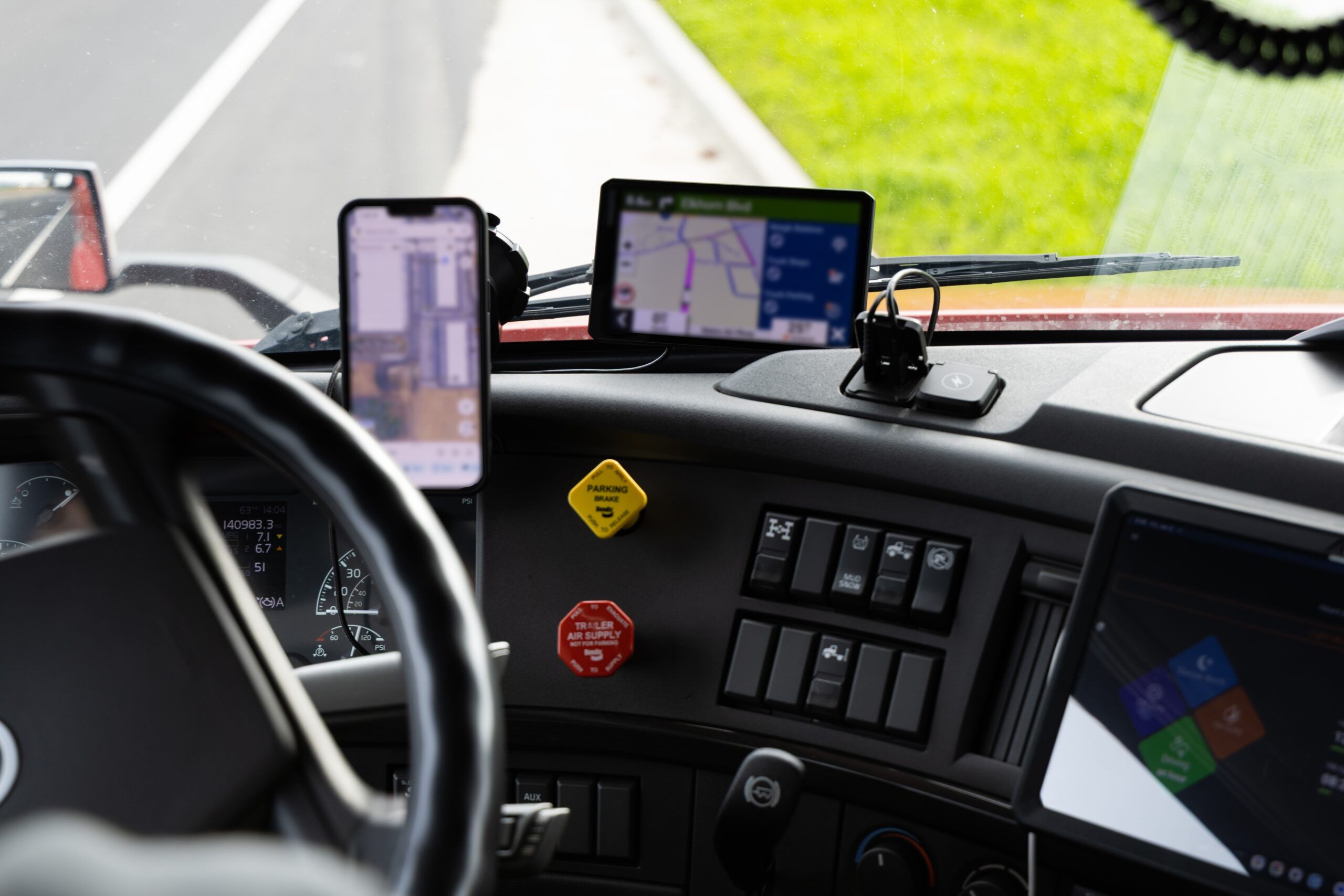
Many drivers rely on Google Maps or similar consumer apps for daily navigation. For simple trips, it works reasonably well. However, these tools are built for passenger vehicles, not commercial trucks.
For fleet managers, this creates inconsistency. Different drivers may take different routes for the same trip, making it harder to standardize operations and track performance across the fleet.
Offline navigation and reliability in real-world conditions
Truck GPS navigation systems are designed to work even in low-connectivity environments. Most commercial devices store maps locally, allowing drivers to continue navigation without relying on constant internet access.
This becomes critical in long-haul operations or remote areas where network coverage is unreliable. While real-time traffic updates may pause without connectivity, core routing and truck-specific restrictions still function.
For fleets using connected systems, route data can sync back once connectivity is restored. When integrated with platforms like Intangles, this ensures that even offline trips contribute to overall fleet visibility and analysis.
Impact of GPS navigation on fuel and maintenance costs
Routing decisions have a direct impact on operational costs. Poor routes increase idle time, unnecessary mileage, and exposure to high-traffic zones, all of which drive up fuel consumption.
Optimized navigation helps reduce these inefficiencies. In many fleets, better routing alone can reduce fuel costs by 10–15% while also lowering stress on critical components like brakes and engines.
Over time, consistent routing also improves maintenance planning. When combined with systems like Intangles, route data can be linked with vehicle diagnostics to identify patterns, predict wear, and reduce unplanned downtime.

Why truck GPS navigation is different for fleets
Fleet navigation is not just about directions. It is about decision-making at scale. A single route might look efficient on a map, but across dozens or hundreds of vehicles, small inefficiencies multiply into significant operational costs. This is why fleet navigation systems are built differently from consumer navigation tools.
Truck GPS navigation systems are built to handle:
- Vehicle-specific constraints such as weight, height, road restrictions and cargo type
- Dynamic route optimization based on traffic, delivery schedules, and priorities
- Multi-stop routing for logistics and distribution operations
For example, a route that looks shorter on a map may not be operationally efficient if it increases idle time or leads to frequent braking in urban traffic. Fleet routing software solves this by optimizing for time, cost, and vehicle health, not just distance.
What fleet managers should evaluate before choosing a GPS navigation system
Most navigation tools look similar at a feature level. The real difference shows up in day-to-day operations, where routing decisions directly impact fuel usage, delivery timelines, and vehicle performance.
For fleet managers, the goal is not just to adopt a navigation system, but to choose one that fits operational realities and consistently delivers better outcomes on the road.
Routing accuracy
Routing accuracy is the first filter. If drivers frequently need to override routes, the system quickly loses credibility and adoption drops.
A system that looks accurate on a map but fails in real-world truck conditions can lead to repeated inefficiencies. Over time, even small routing errors compound into higher fuel costs, delays, and inconsistent delivery performance across the fleet.
Truck-specific intelligence
Truck-specific routing is non-negotiable. The system must account for height restrictions, weight limits, and road regulations that apply to commercial vehicles.
Without this, fleets face avoidable risks such as compliance violations, last-minute detours, and unsafe routing decisions. These issues not only disrupt operations but also increase uncertainty in planning and execution.
Real-time traffic and rerouting
Live traffic visibility alone is not enough. The system should actively guide decisions by dynamically rerouting vehicles based on current conditions.
This becomes especially important in urban logistics and high-density delivery networks, where traffic patterns can change quickly. Effective rerouting helps maintain delivery schedules and reduces time lost in congestion.
Integration with fleet systems
Navigation should not operate in isolation. Its value increases significantly when it connects with other fleet systems such as tracking, maintenance, and fuel monitoring.
When routing data feeds into these systems, fleet managers can better understand how route decisions impact fuel consumption, vehicle wear, and overall operational efficiency. This creates a more connected and data-driven approach to fleet management.
Ease of use for drivers
Driver adoption is critical. Even the most advanced system fails if drivers do not trust it or find it difficult to use.
The interface should be simple, reliable, and easy to follow without requiring extensive training. Consistent usage on the ground is what ultimately drives measurable improvements.
Visibility for fleet managers
Manager visibility completes the loop. Fleet managers should be able to clearly identify where delays are happening, which routes consistently underperform, and what factors are driving higher costs.
Without this level of insight, navigation remains a black box, making it difficult to improve performance over time.
In practice, choosing the right system is less about comparing features and more about understanding how well it supports daily operations. As fleets grow, navigation becomes a critical input into broader decision-making influencing everything from fuel efficiency to maintenance planning.
This is where connecting navigation with a wider fleet intelligence layer becomes valuable. Platforms like Intangles extend the role of navigation by linking route data with vehicle performance and operational insights, helping fleet managers move from reactive decisions to more consistent, data–driven outcomes.
How route data connects to fleet intelligence
Most fleets use GPS navigation to guide drivers, but very few fully utilize the data it generates. Every trip produces detailed navigation data, including routes taken, traffic conditions, idle time, and driving patterns.
The insight most fleet managers miss is this: navigation systems are constantly generating high-volume route data, but without the right system, it remains underutilized. When this data is connected with an AI-driven platform, it becomes a foundation for fleet route optimization, route data fleet management, and route-based fleet analytics.
Instead of reacting to issues after they happen, fleets can start using navigation data to make proactive, data-driven decisions.
Route-based vehicle health prediction
Not all routes impact vehicles the same way. Certain routes consistently put more stress on specific components.
Urban routes with frequent stops increase brake wear, while hilly or heavy-load routes add strain on the engine and transmission. Over time, these patterns are visible in route data.
By combining navigation data with vehicle diagnostics, fleets can move toward predictive maintenance. Systems like Intangles use this approach to connect route conditions with vehicle health signals, helping identify potential failures before they lead to breakdowns.
Route-based fuel optimization
Fuel efficiency is heavily influenced by routing decisions, not just driving behavior.
Two routes with similar distances can produce very different fuel outcomes depending on traffic density, idling time, and road conditions. Without analyzing route-level data, these inefficiencies often go unnoticed.
With navigation data fleet intelligence, fleets can identify fuel-heavy routes, reduce unnecessary idling, and optimize routes for efficiency rather than just distance. This enables more consistent fuel savings across operations.
Route risk scoring
Every route carries a different level of operational risk. Some routes consistently involve higher traffic congestion, poor road conditions, or accident-prone zones.
Using route-based fleet analytics, fleets can assign risk scores to routes based on historical data and real-world conditions. This allows fleet managers to make more informed routing decisions, especially for time-sensitive or high-value deliveries.
When combined with platforms like Intangles, this data can be used to proactively avoid high-risk routes, improve driver safety, and reduce unexpected disruptions.

GPS navigation vs. fleet telematics vs. driver behavior systems
Fleet managers often evaluate navigation and tracking tools together, but each system serves a distinct role in operations. Understanding how navigation and tracking work alongside driver behaviour systems is essential for building a connected fleet stack. With the right telematics integration, these systems move from isolated tools to a unified source of operational insight.
Fleet telematics: visibility into location and trip data
Telematics systems form the foundation of fleet GPS tracking, providing visibility into vehicle location, trip history, and key events such as idling, stops, and engine performance. For fleet managers, this helps answer what happened during a trip and where inefficiencies or issues occurred.
GPS navigation: real-time route guidance for drivers
Navigation systems focus on the next decision. They guide drivers on the best route based on traffic, road conditions, and truck-specific restrictions. Unlike tracking, navigation is forward-looking and plays a direct role in improving routing efficiency and consistency across the fleet.
Driver behavior systems: insights into driving patterns
Driver behaviour systems analyze how the vehicle is being operated, tracking patterns like speeding, harsh braking, and excessive idling. When combined with telematics integration, this data helps fleet managers connect driving habits with route performance, fuel usage, and overall operational outcomes.
Together, these systems provide a complete view of fleet operations. Navigation influences decisions, telematics captures outcomes, and driver behaviour explains performance. For fleet managers, the real value comes from how well these systems work together, not in isolation. This makes choosing the right combination critical, which is where understanding how to evaluate and select the best system for your fleet becomes the next step.
How to choose the best system for your fleet
Choosing the best GPS navigation system for trucks is not about picking the most feature-rich tool. It is about selecting a system that fits how your fleet operates on a daily basis. What works for a small fleet may not scale for a larger operation with multiple routes, regions, and compliance requirements.
For fleet managers, the decision should be based on operational complexity, not just features. A practical way to approach this is through a fleet routing software comparison, evaluating how different systems handle routing, visibility, and integration with the rest of your fleet stack.
Many fleets today evaluate platforms for their navigation and telematics capabilities. These tools are often strong at tracking and visibility, but the real differentiation comes from how well routing data connects with operational outcomes like fuel, maintenance, and performance.
Small fleets (owner-operators or 2-5 trucks)
For smaller fleets, the focus is on simplicity and reliability. Operations are typically less complex, and drivers often rely on familiar routes.
At this stage, a system should provide:
- Truck-specific navigation
- Offline map support
- Easy setup and minimal training
Systems that combine basic navigation with video telematics and dashcam capabilities are often sufficient. Platforms like Motive are commonly used here, especially for fleets looking to improve visibility into driver activity and on-road events.
The priority is not deep analytics, but having a reliable system that helps track vehicles, monitor driver behavior, and support day-to-day operations.
Mid-size fleets (10-100 trucks)
As fleets grow, routing decisions start to directly impact fuel costs, delivery timelines, and driver productivity. Managing multiple vehicles across routes requires more coordination and consistency.
Fleet managers should look for:
- Multi-stop route optimization
- Real-time traffic and rerouting
- Integration with fleet GPS tracking and dispatch systems
At this stage, fleets often evaluate platforms like Geotab, which provide strong telematics and reporting capabilities. However, traditional telematics systems primarily focus on tracking and historical data.
This is where the shift toward predictive maintenance and proactive fleet management begins. Fleet managers start looking beyond what happened to understanding what is likely to happen next especially in terms of vehicle health and downtime.
Large-size or mixed fleets (multi-country, hazmat, diversified vehicles)
For large or complex fleets, navigation becomes part of a broader operational system. Fleets operating across regions or handling specialized cargo require more advanced capabilities.
Fleet managers should look for:
- Compliance-aware routing across regions
- Advanced route optimization at scale
- Integration with maintenance, fuel, and analytics platforms
Platforms like Samsara are often evaluated at this level for their integrated approach to tracking, routing, and visibility. However, as operations scale, the focus increasingly shifts toward AI-driven insights and predictive intelligence.
This is where platforms like Intangles come in, by connecting routing data with vehicle diagnostics, fuel patterns, and operational insights. Instead of treating navigation as a standalone tool, it becomes part of a system that supports predictive maintenance, fuel optimization, and more consistent fleet performance.
Intangles is built around these day-to-day operational challenges. Rather than working as separate modules, they connect telematics, GPS data, engine signals, and advanced analytics to give fleet managers a clearer view of what is actually happening across the fleet.
This becomes especially relevant in areas fleets deal with regularly, such as fuel efficiency, recurring maintenance issues, and impact of routes and driving patterns on vehicle health. Over time, this helps shift fleet operations from reacting to problems after they occur to identifying them earlier and managing them with better context.
Learn how you can improve operational efficiency and reduce costs by exploring Intangles’ GPS fleet tracking platform and speak with our team today.
KNOW MORE
Frequently Asked Questions
What is the difference between GPS navigation and GPS tracking for fleets?
GPS navigation helps drivers choose the best route in real time, while GPS tracking provides fleet managers with visibility into vehicle location, trip history, and performance. Navigation is forward-looking, whereas tracking focuses on monitoring and analysis.
Can truck drivers use Google Maps for navigation?
Truck drivers can use Google Maps, but it is not designed for commercial vehicles. It does not account for truck-specific restrictions like height limits, weight limits, or restricted roads, which can lead to delays and compliance risks.
Do truck GPS navigation systems work without the internet?
Yes, most truck GPS navigation systems support offline maps, allowing drivers to navigate even in areas with poor or no network connectivity. However, real-time traffic updates and live rerouting may require an internet connection.
How does GPS navigation help reduce fleet fuel costs?
GPS navigation reduces fuel costs by optimizing routes, avoiding traffic congestion, and minimizing idle time. Efficient routing can lower fuel consumption by 10–15% in many fleets while also reducing unnecessary mileage.
What should fleet managers look for in a GPS navigation system?
Fleet managers should evaluate routing accuracy, truck-specific restrictions, real-time traffic updates, integration with fleet systems, ease of use for drivers, and visibility into route performance to ensure the system improves overall efficiency.






We’re looking forward to meeting you